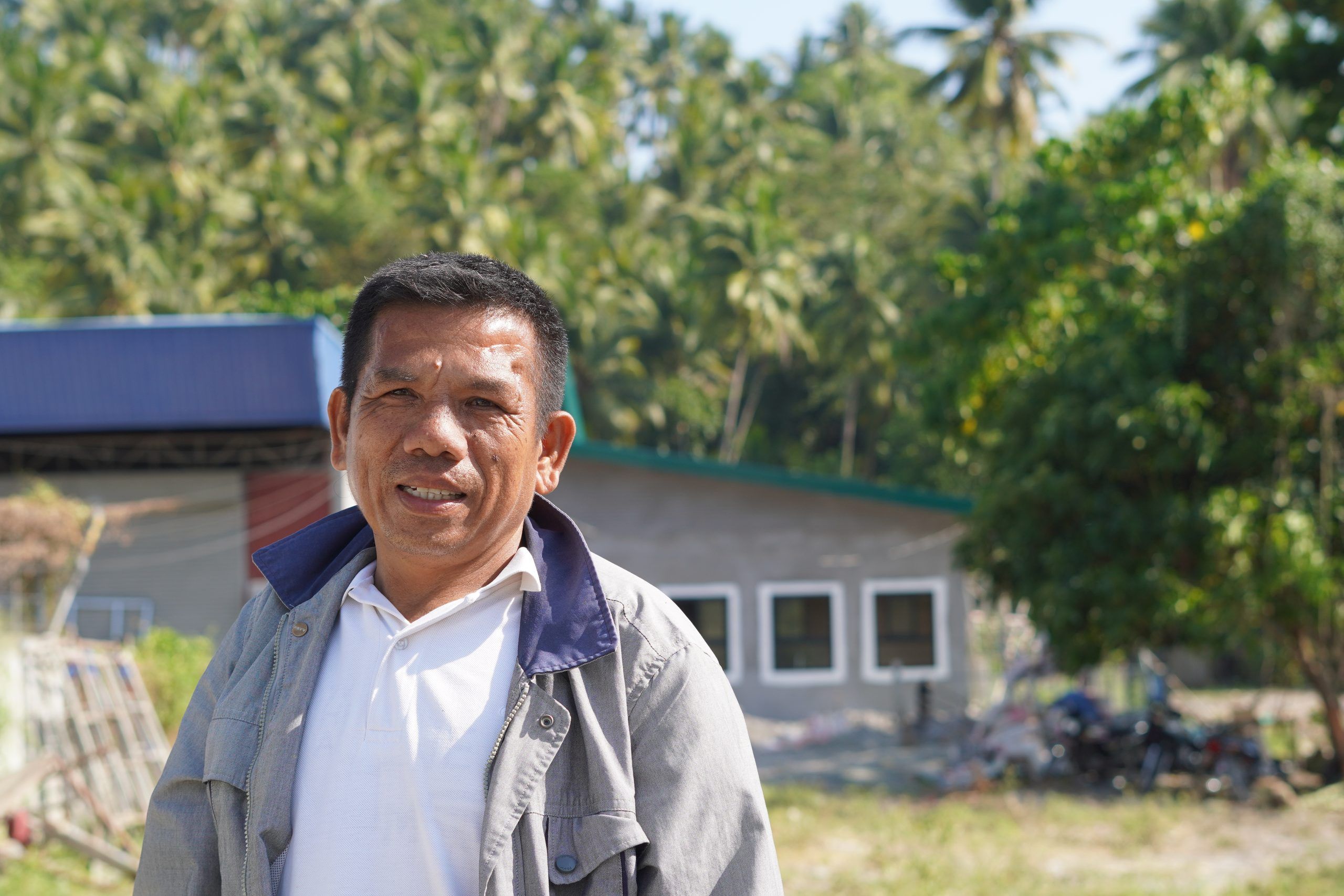
Malapatan sits along the coast of Sarangani, a municipality more used to fishing boats and coconut groves than to the kind of violence that can come from underground. When the 7.8-magnitude earthquake struck near Sarangani, it split the earth open underneath Fernando’s neighborhood in Sitio Lanao.
“I’ve never experienced anything like it.”
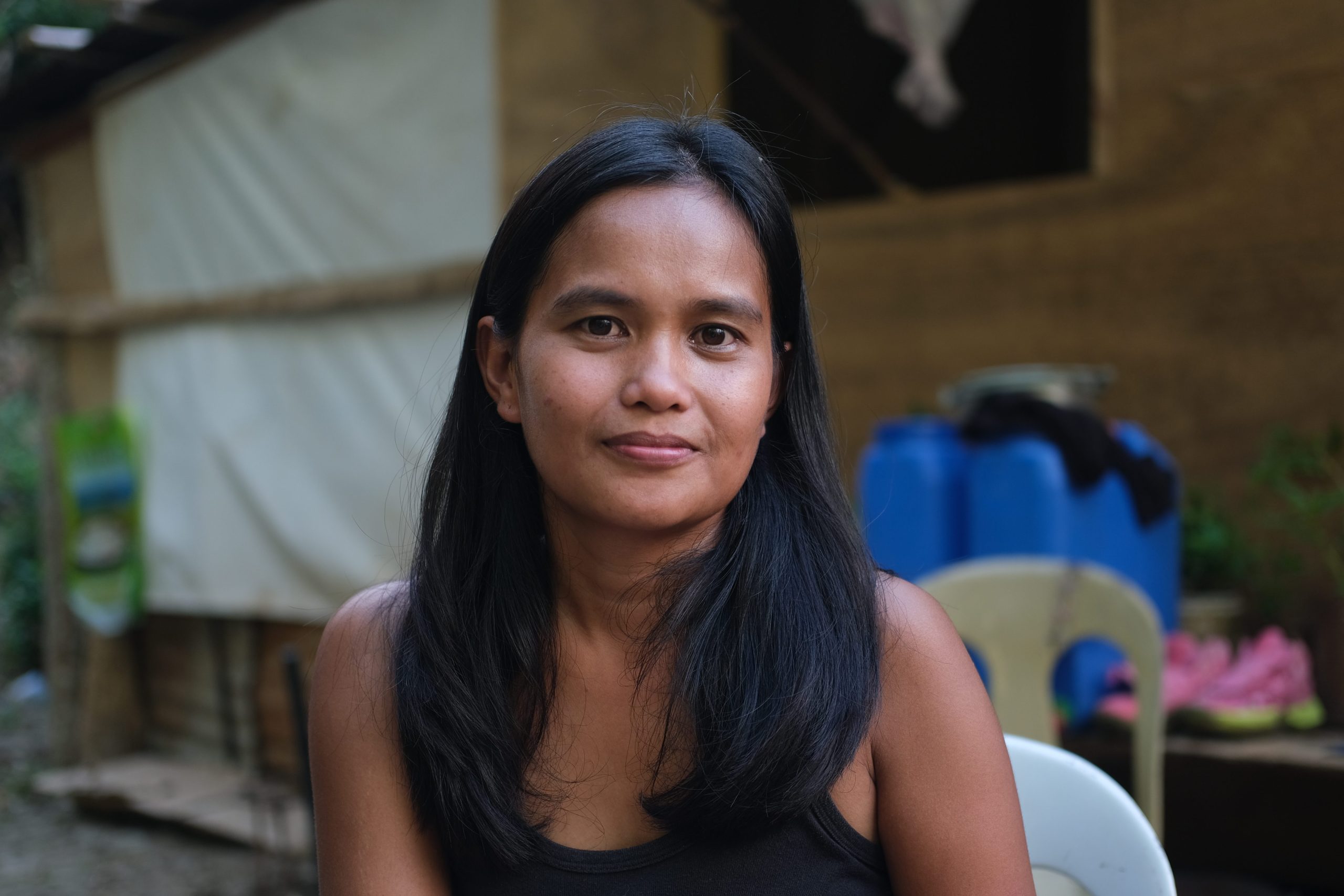
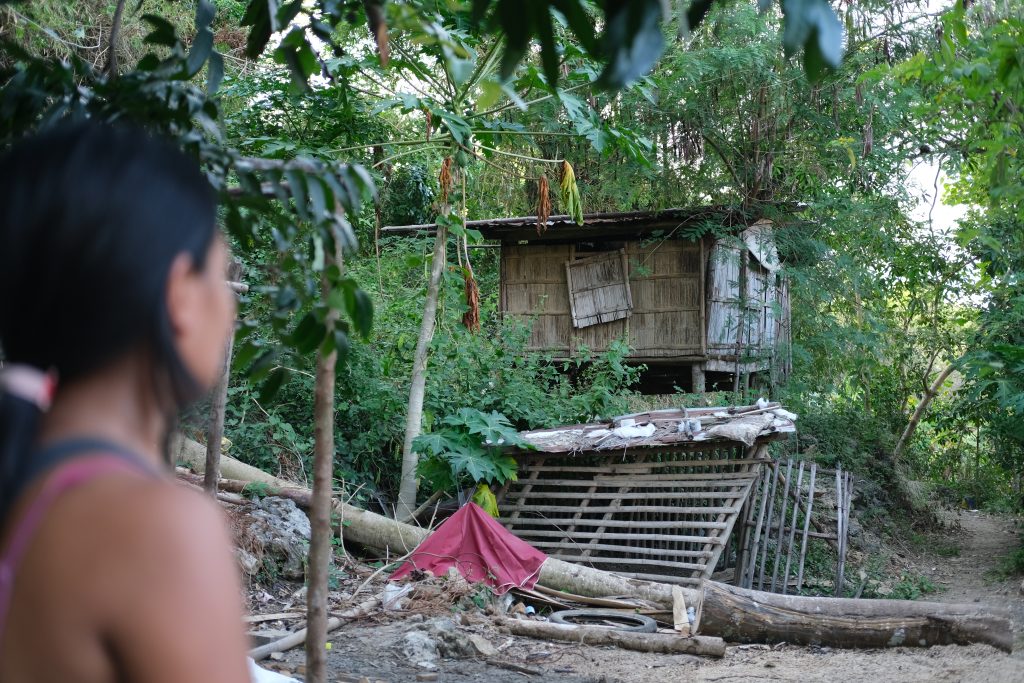
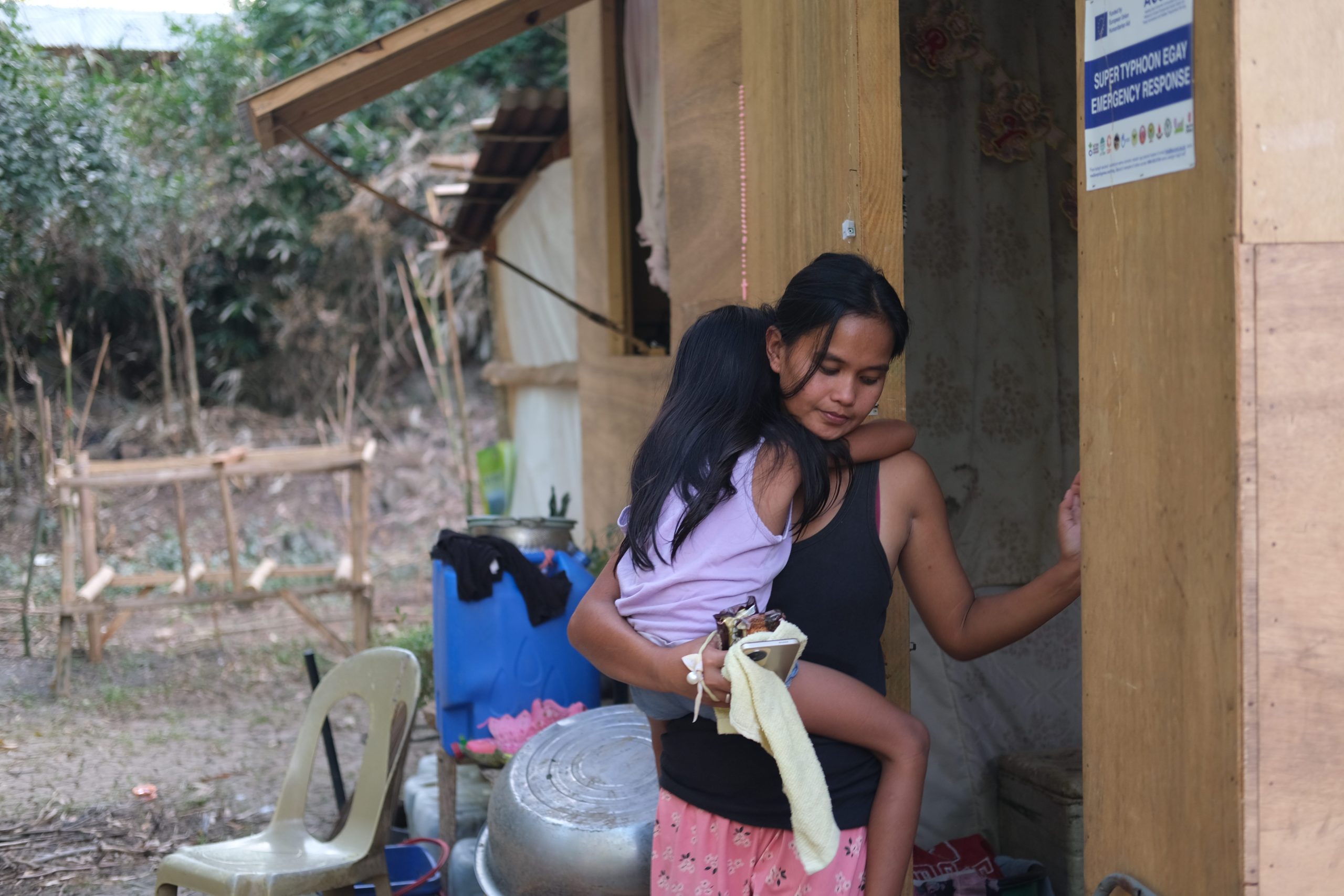
Fernando, a pastor and father, had lived on that land for years. The quake had left it with a crack, long and deep enough to swallow four houses whole. He, his family, and his community had no choice but to leave it behind entirely.
Where Do We Go Now?
The days after the earthquake were about one question: where do we go now?
Government assistance gave Fernando the means to build an emergency shelter on safer grounds. It was in this same period that the European Union-funded ACCESS Project reached Malapatan, delivering rice and relief goods to families like his. With very limited resources, the food kits eased their expenses and bridged their needs for the next two weeks, while they were still figuring out their way to recovery.
More Than Aid
Beyond the assistance, Fernando shared that what stayed with him was the company. “We got to talk with people, connect with others,” he said. “At least you’re not alone.” People who visited weren’t just delivering aid; their presence, he says, was its own kind of relief. “Even when you’re worrying, seeing that kind of support makes you feel stronger.”
An Anchor for Others
For a man who lost his home to the earthquake, Fernando talked less about what was taken from him and more about what he feels he could give. He has become an anchor to his companions, urging them to stay steady through hardship. “Whatever trial comes, we need to stay strong,” he tells them, a sentiment that he also had to practice himself, in real time, while the ground was still moving.
He has arrived at a conviction he returns to often: that receiving help comes with an obligation to extend it. “It’s not just about receiving,” he said. “You also need to give to other people.” Seeing people come together for the earthquake response, urged him to be willing to help other people in need. For Fernando, the lesson wasn’t only that help arrived, it was that help is something you pass on.
Still Standing
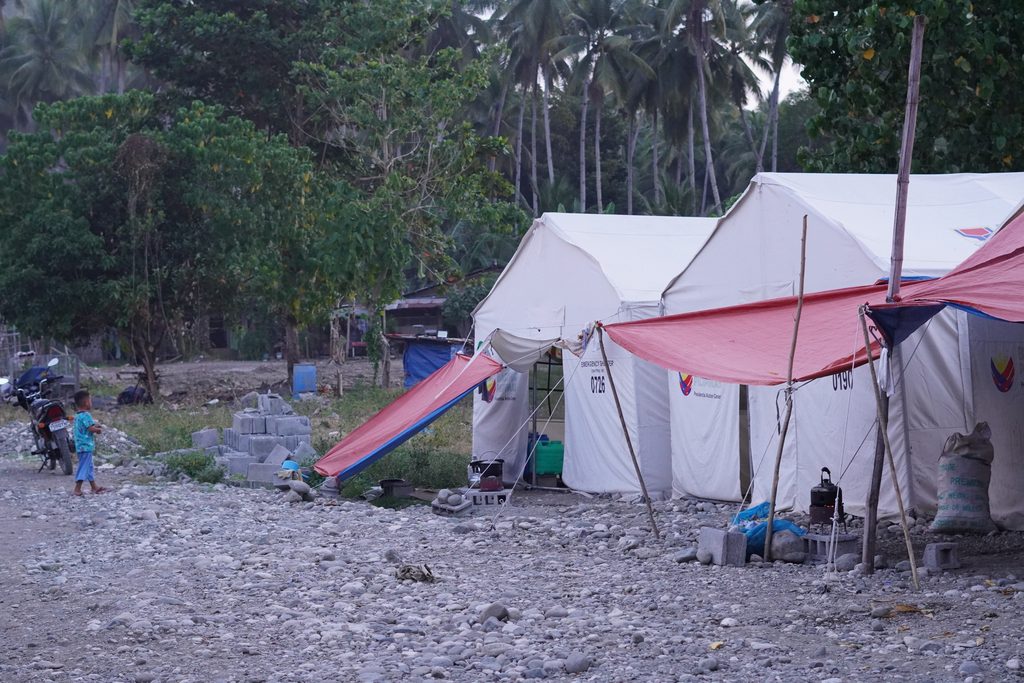
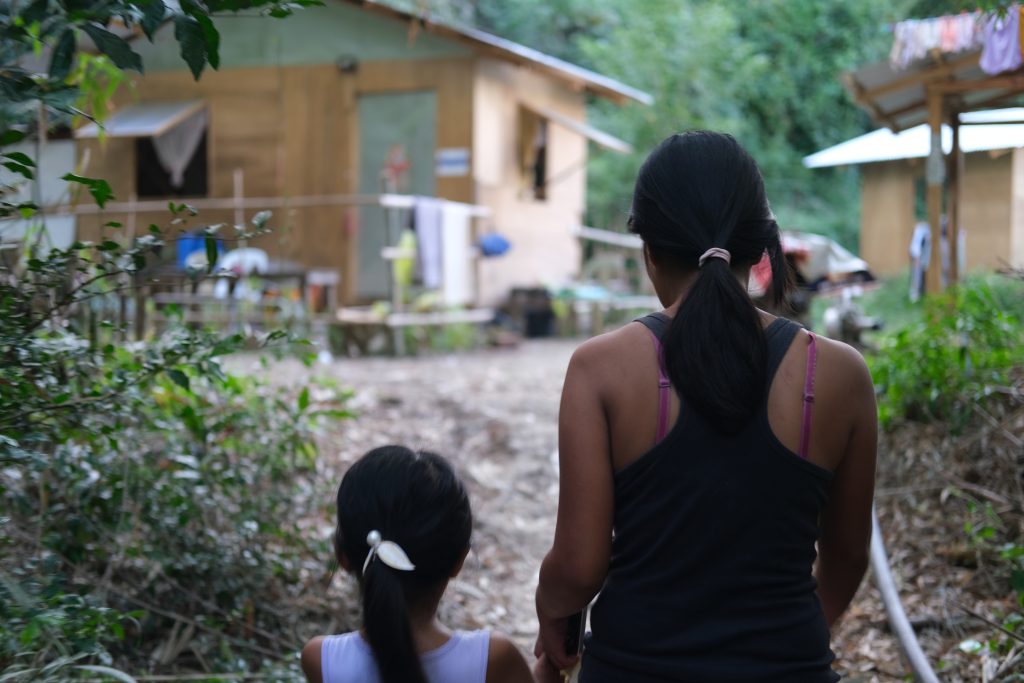
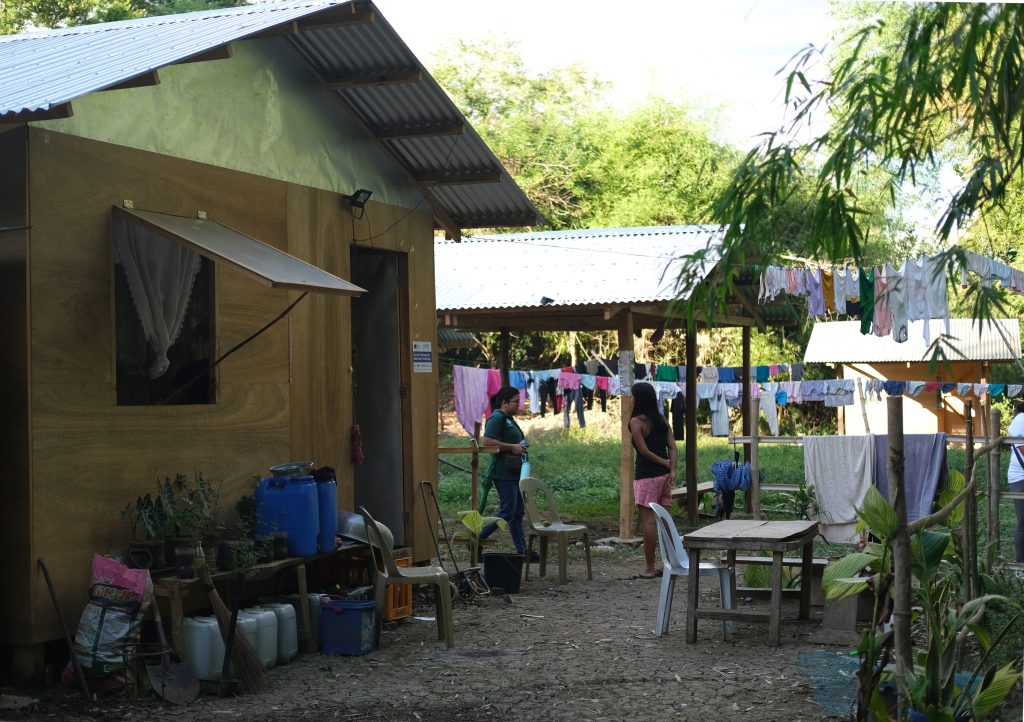
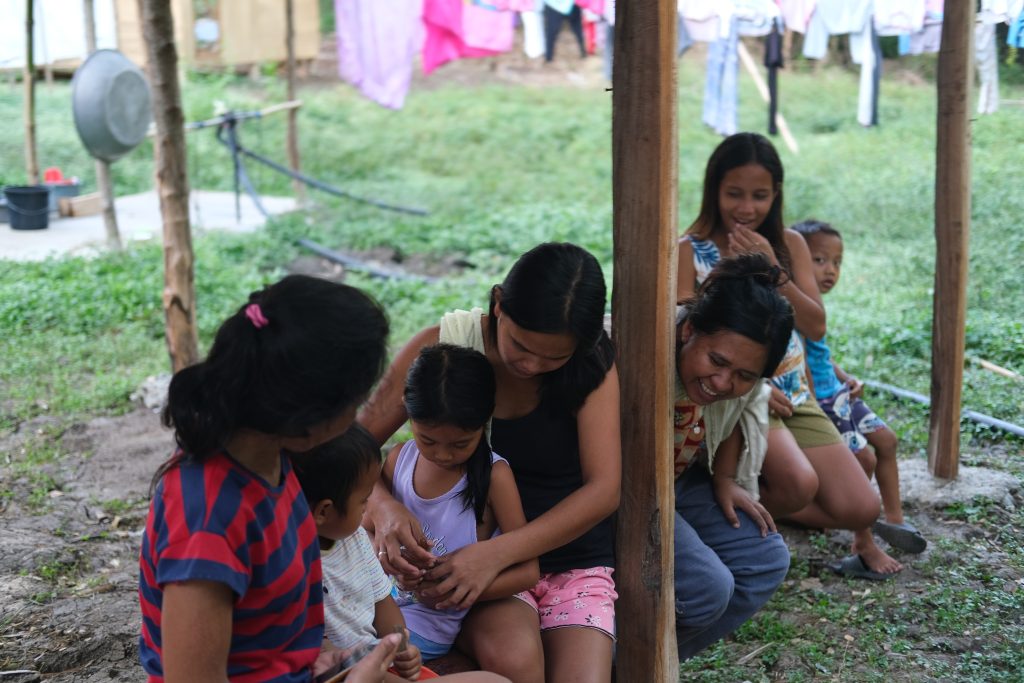
Today, his family is residing on an evacuation camp with his neighbors and his children are back in school. In a community still rebuilding block by block, Fernando reminds everyone else that it’s possible to be strong.
The crack in the old land is still there, but somehow, Fernando has chosen to plant himself back down. Through receiving help, he found that even when the ground gives way, it’s still possible to find solid footing again, and to help someone else find theirs.
Blog, Disaster Response, Featured Stories, Humanitarian, Latest News & Stories, Women and Girls
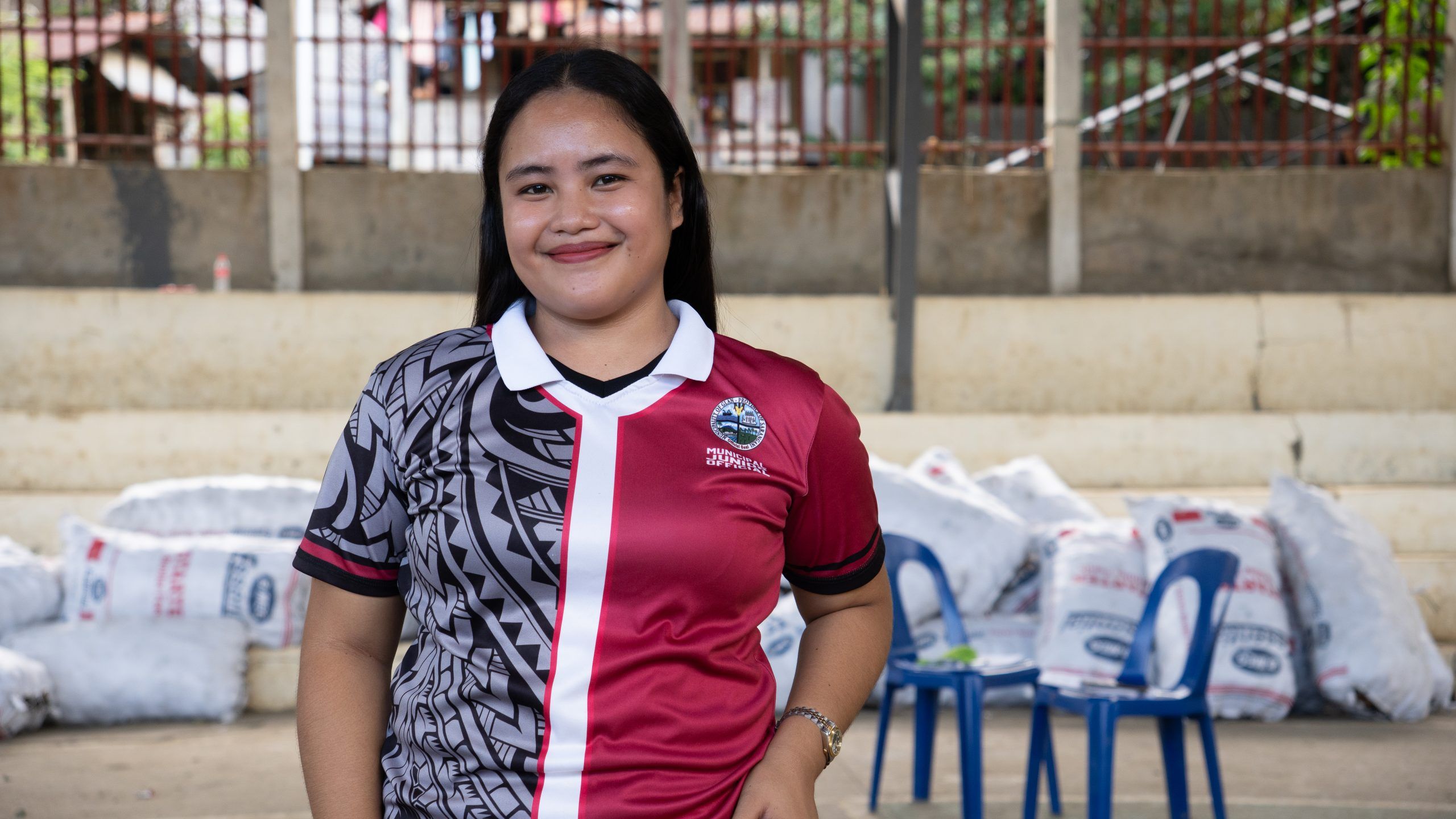
Ana, 26, leads the youth council of Barangay Batotuling, one of the hardest places to reach in Sarangani, Philippines. Her council was used to bringing help to other villages hit by disaster. Then, in June, a magnitude 7.8 earthquake shook her community, damaged more than 100 houses, the farms and their sources of water.
Ana never planned to run for office. Her grandmother, barangay treasurer for 20 years, kept telling her she already spoke like a leader. “My grandmother said I was always the one talking about what was wrong in our community,” Ana says. “She told me that if I could see it, I should be the one to fix it.”
She listened. Three years ago, she ran for the office of the Sangguniang Kabataan (Youth Council) chairperson in her barangay and she won. The village is small with only more than 1,000 people living there. most of them B’laan, an Indigenous Peoples group. Families grow corn, bananas, and coconut for copra — seasonal work that heavy rain, long drought or any disaster can wipe out.
That uncertainty falls hardest on the young. Many cannot afford college. Some marry early to escape what waits at home.
“When there are no harvest and no money for school, young people stop hoping anything for themselves,” she says. “That is the hardest part to watch.”
Ana’s answer was to give young people something to belong to: a real voice in barangay decisions, and activities like youth weeks that kept them connected. And because their municipality is prone to disasters, her council would set aside part of its funds to bring relief goods to young leaders and their families in affected communities.
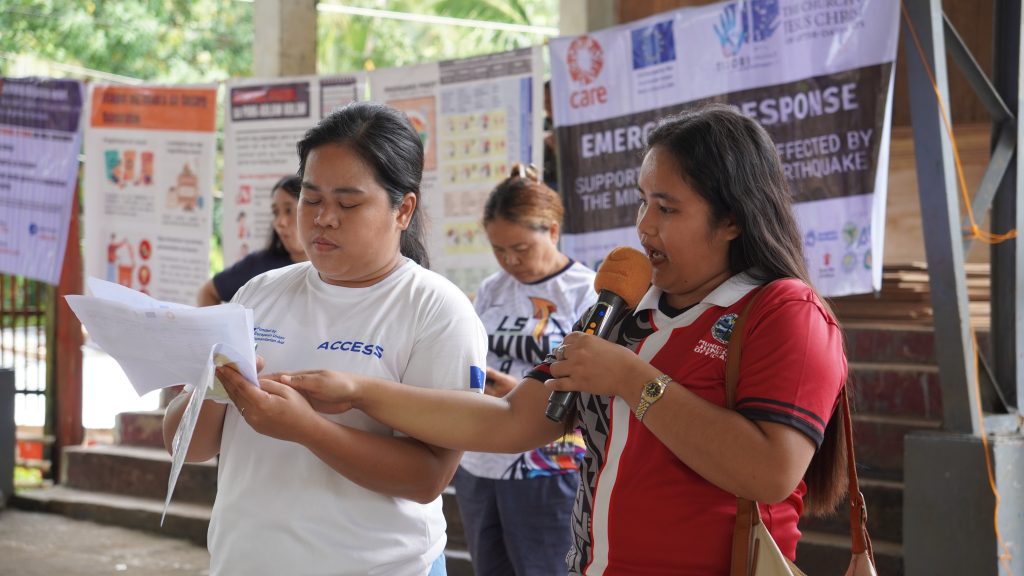
Ana assists CARE staff in facilitating the distribution of food kits and solar lamps and street lights at the community. @2026 Mary Therese Norbe/CARE
Then the disaster came to them. On June 8, the ground moved under Batotuling. Ana and the other barangay officials met immediately. People were shaking, afraid to go back inside. More than 100 households lost their homes. Others still had walls standing but would not sleep behind them, watching the cracks widen with every aftershock. The families who lost the most lost twice: the earthquake took their houses, then tore through the farms that fed them and paid for everything else. The worst loss was the water. Landslides buried the springs, the community’s only source of drinking water.
Help began to arrive in waves. The Department of Social Welfare and Development got food packs in after two days. A week later came the helpers Ana recognized best — young people. The Sangguniang Kabataan of Barangay Malandag, in Malungon, arrived with water, rice, canned food, and clothes. For the first time, the young leaders of Batotuling were on the receiving end.
Recovery had barely started when the monsoon rains came, soaking slopes the earthquake had already loosened. The hillsides slid again, carrying off what was left of the crops — and the road, cutting off Batotuling and the barangays around it. Power lines went down too.
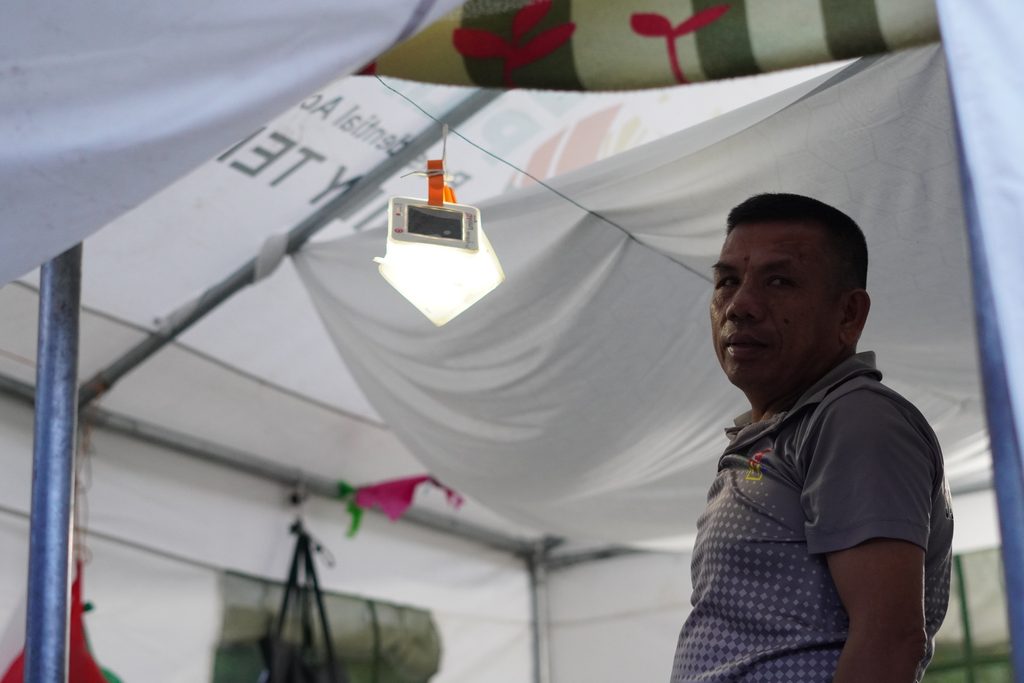
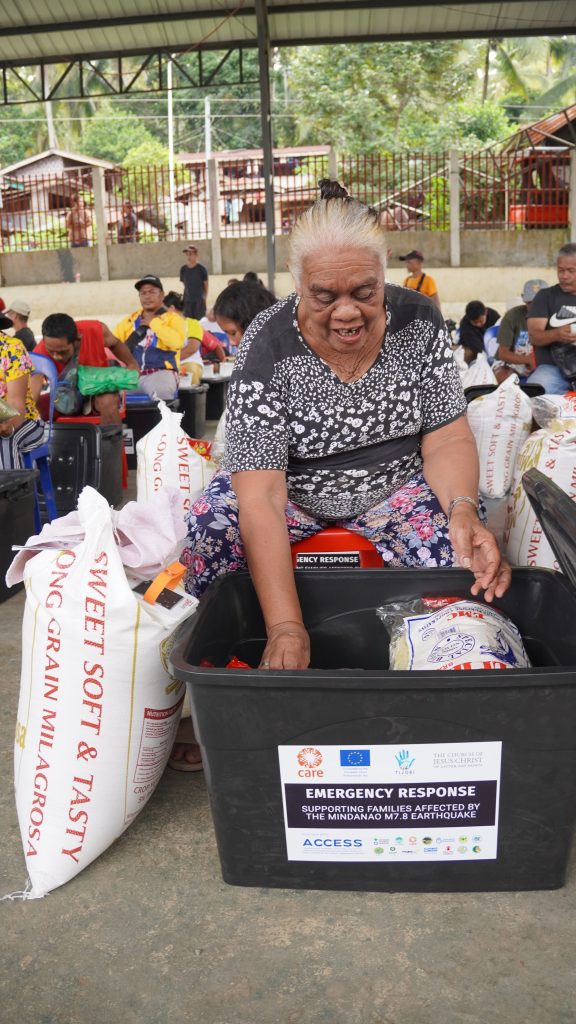
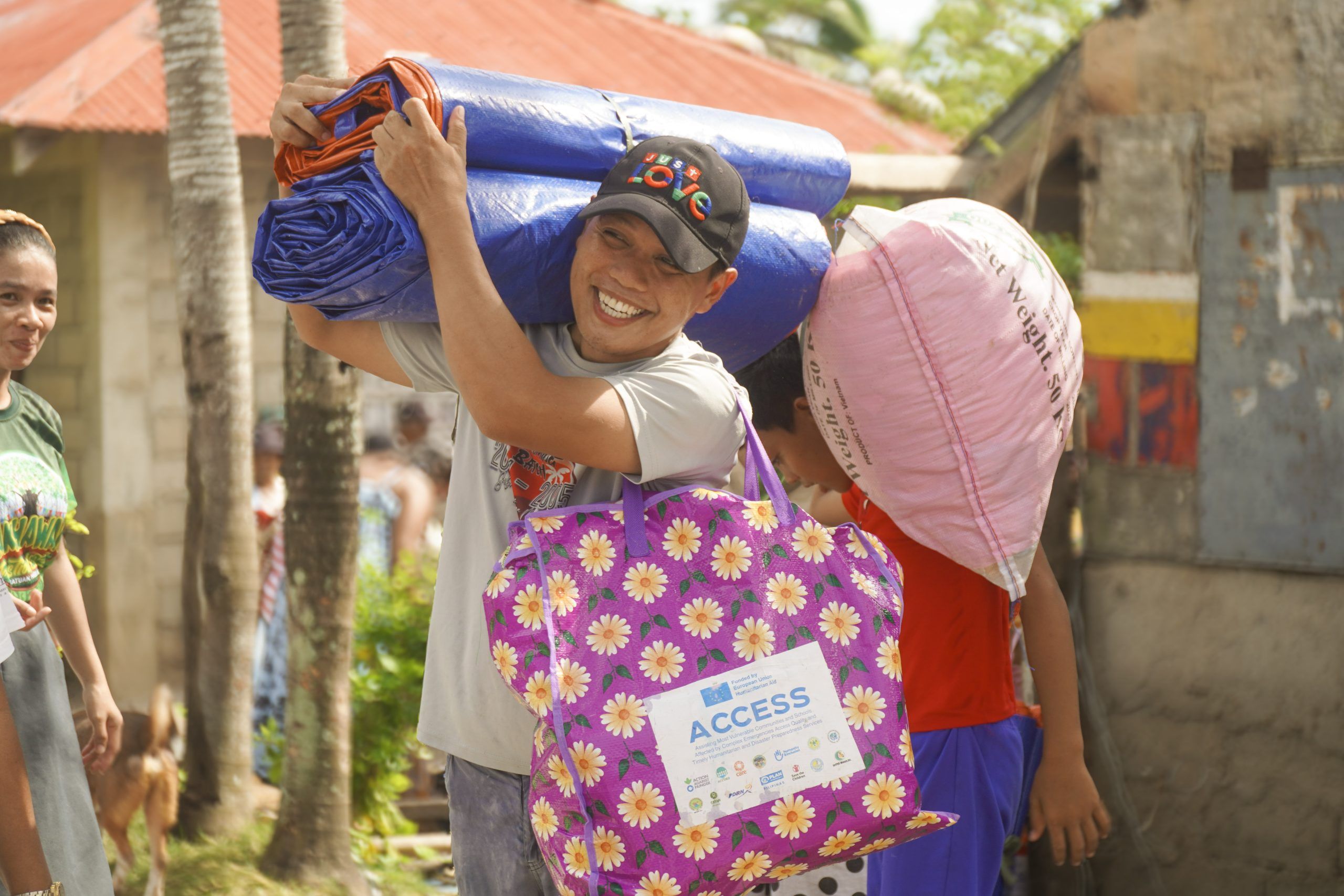
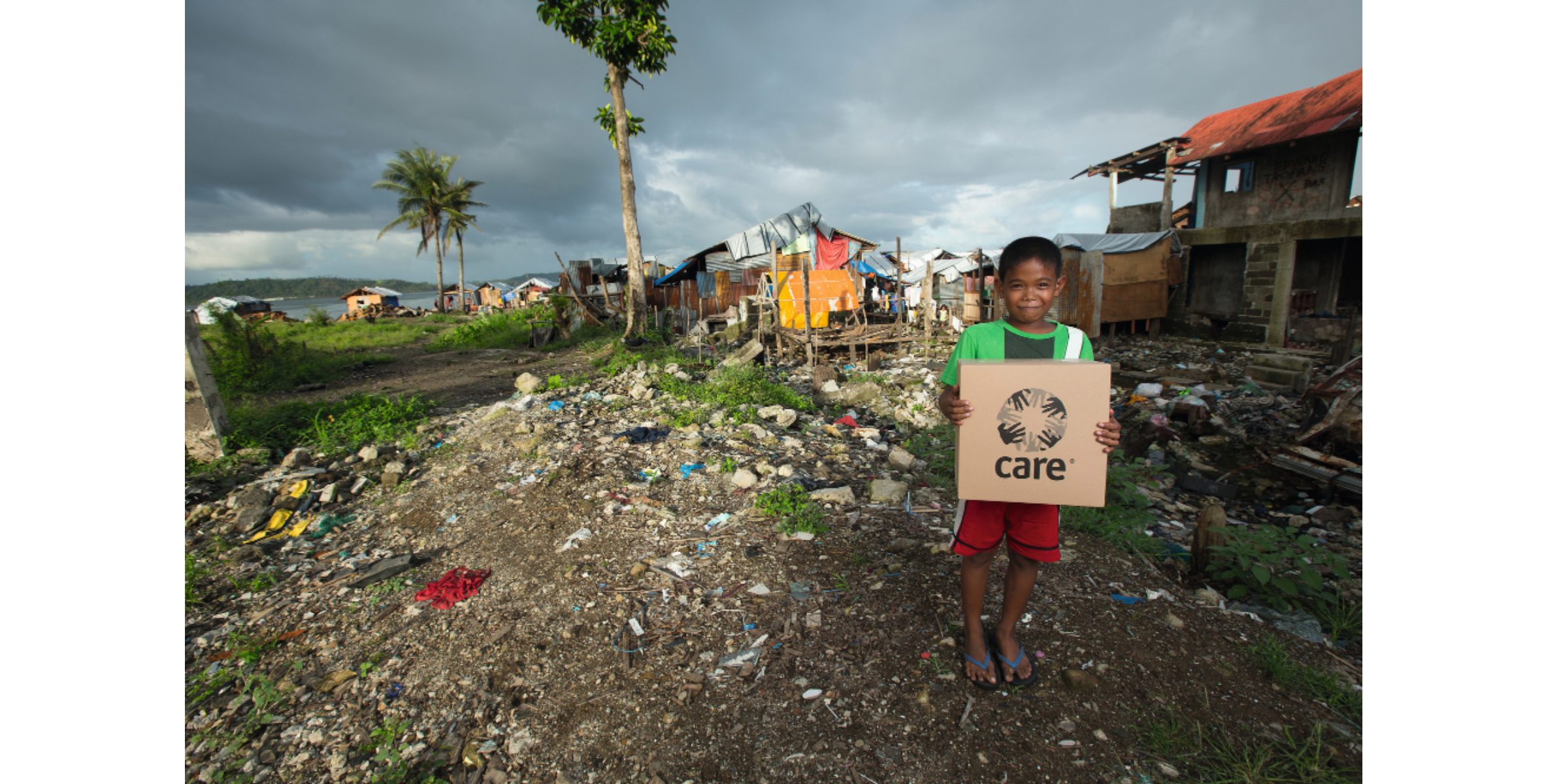
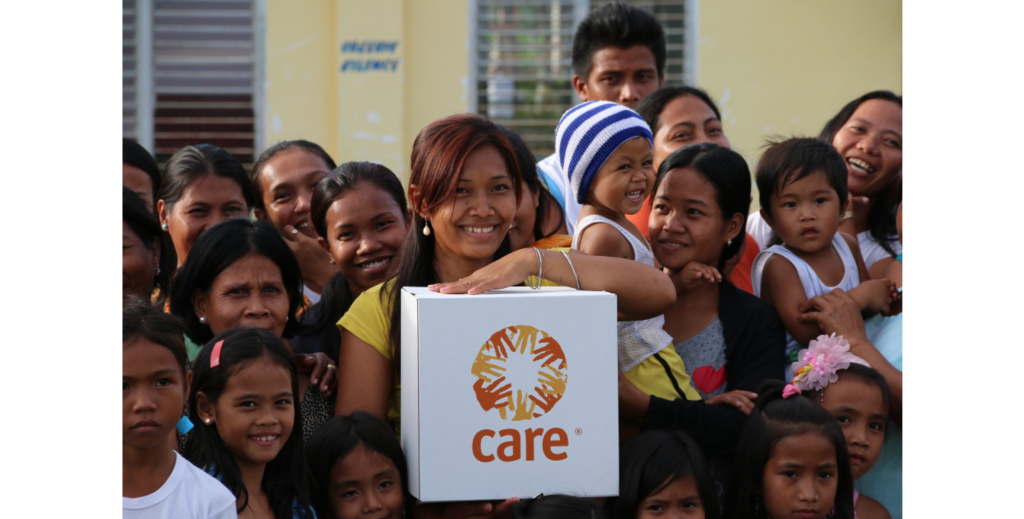
On July 15, the CARE Philippines team got through anyway. Each family received a food kit designed to feed a family of four for 15 days: a 25-kilo sack of rice, a tray of eggs, dried fish, mung beans, peanut butter, cooking oil, and canned fish and meat, all packed in a storage box that keeps food dry. CARE also brought solar lamps for families sleeping outside, and street lights for the barangay, so no one has to move in the dark when an aftershock hits.
Ana was in the middle of it. She worked with the CARE team to validate the list of affected families, making sure those who lost the most came first. And when distribution day came, she was one of the officials keeping the line moving and the process fair.
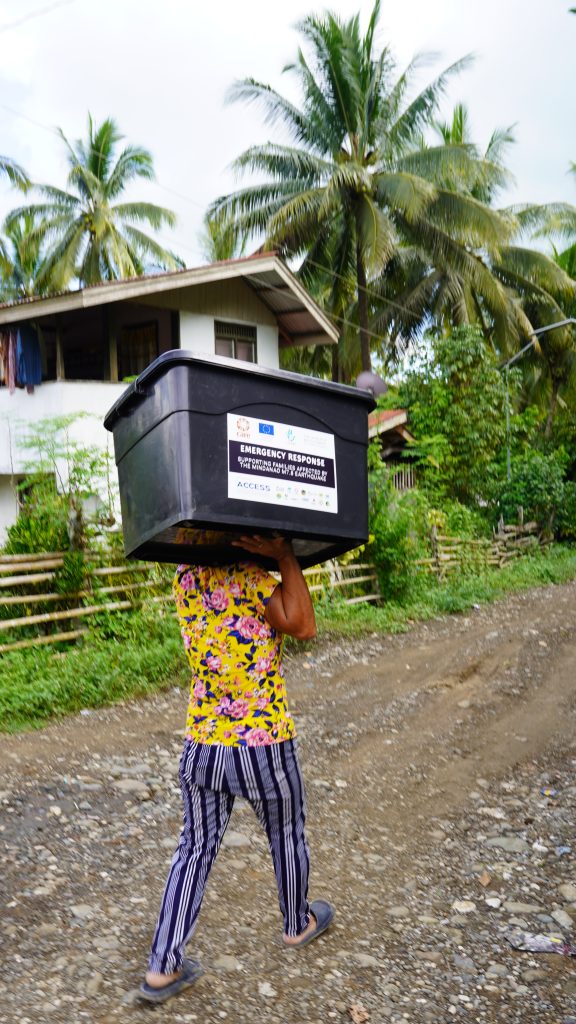
Photo: Residents receive and carry their food kits home to their families who have limited food stock since the earthquake. @2026 Mary Therese Norbe/CARE
“Losing your house is hard, but losing your farm means you do not know what you will eat next month,” Ana says. “So, this support means a lot to those families who have been so worried for days.”
What Ana wants next is water the community can rely on, farms that can feed people again, and young people who finish school before they decide anything else about their lives. “It’s going to take us a long time to recover but knowing that there are people who support us gives us enough hope to move on”, she added.
—————————————–
The Emergency Response supporting families affected by the M7.8 earthquake is led by CARE Philippines, together with partners in the Humanitarian Partnership Platform (HPP), Philippine Inclusive NGO Network, and the ACCESS consortium, co-funded by the EU Civil Protection & Humanitarian Aid, the Tijori Foundation, and The Church of Jesus Christ of Latter-day Saints.
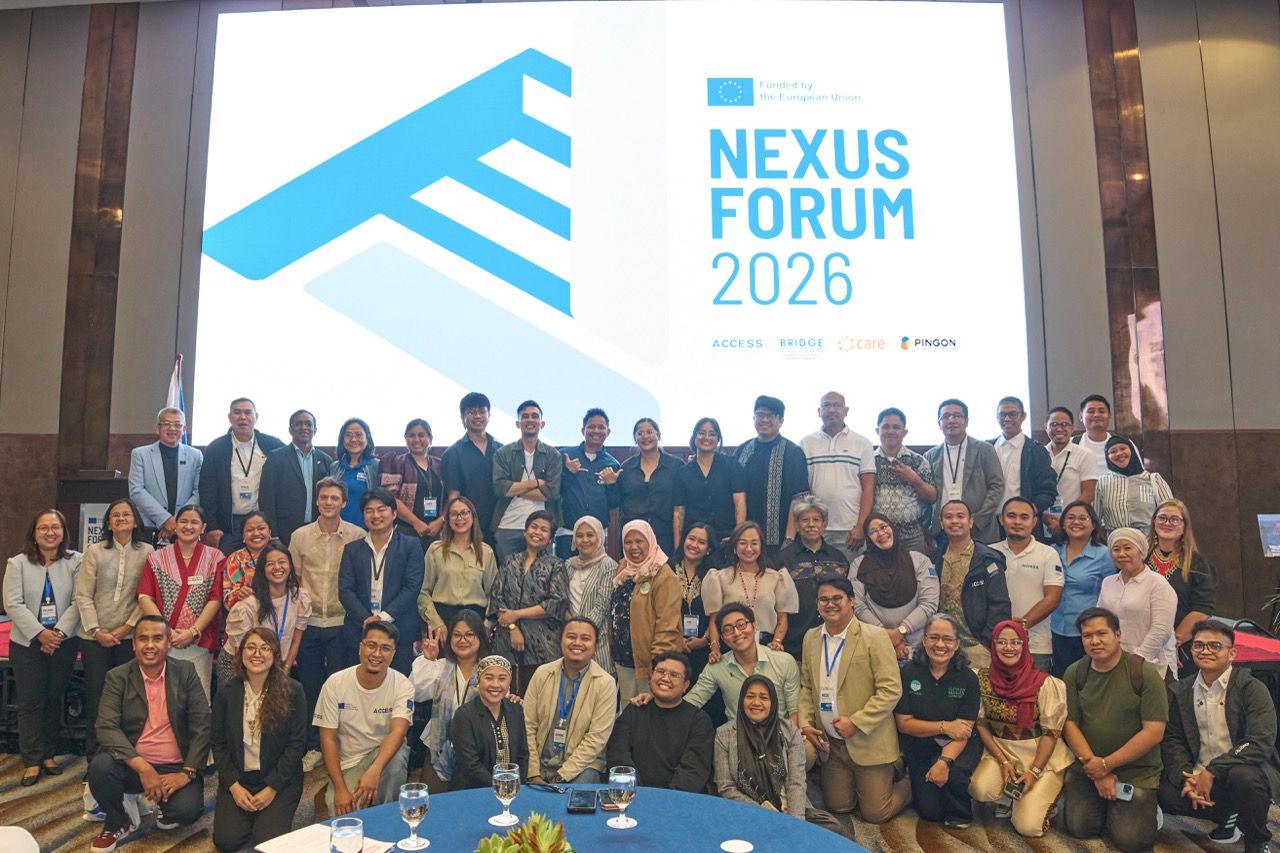
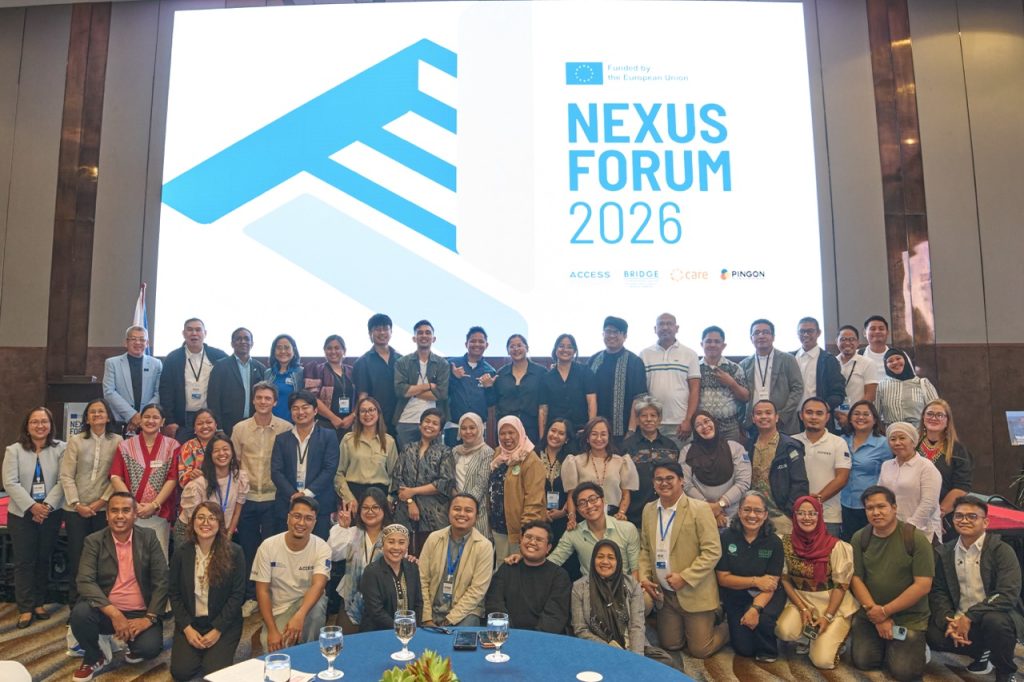
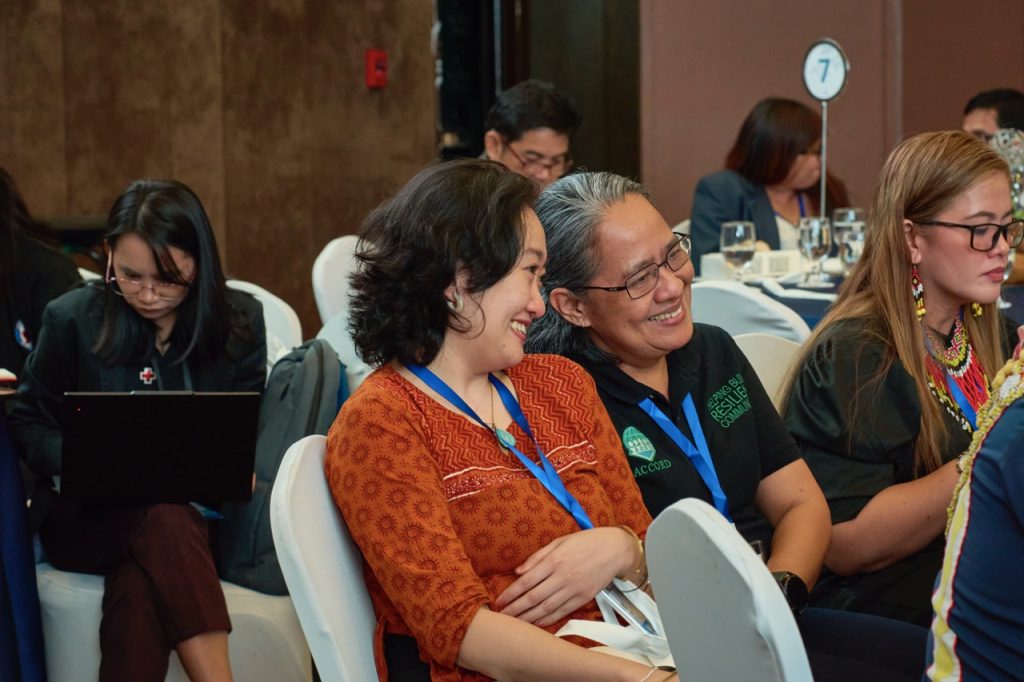
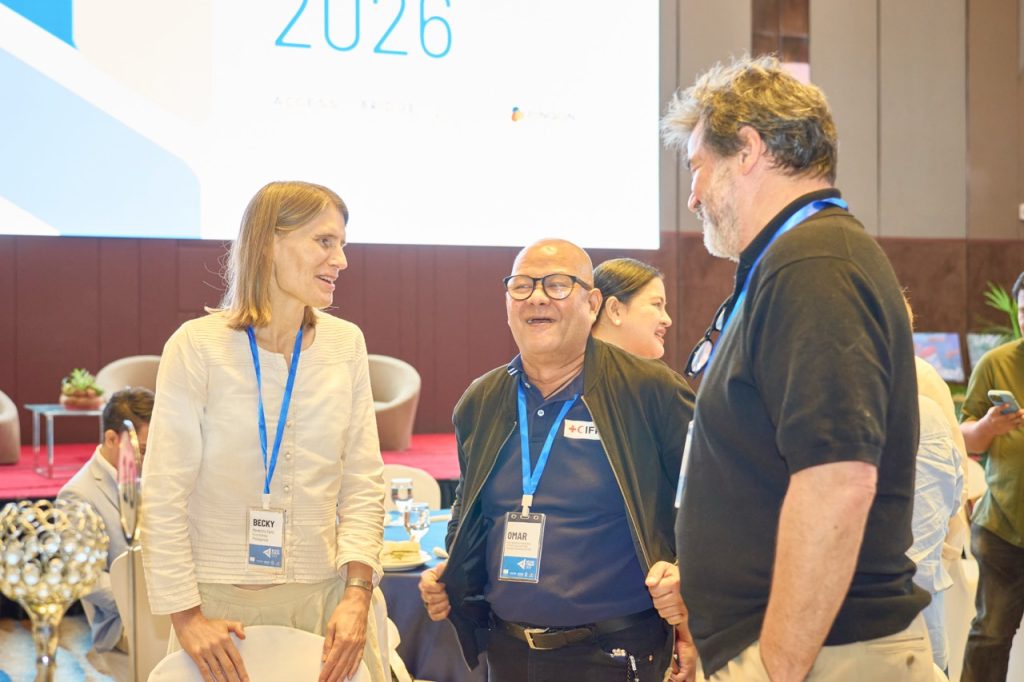
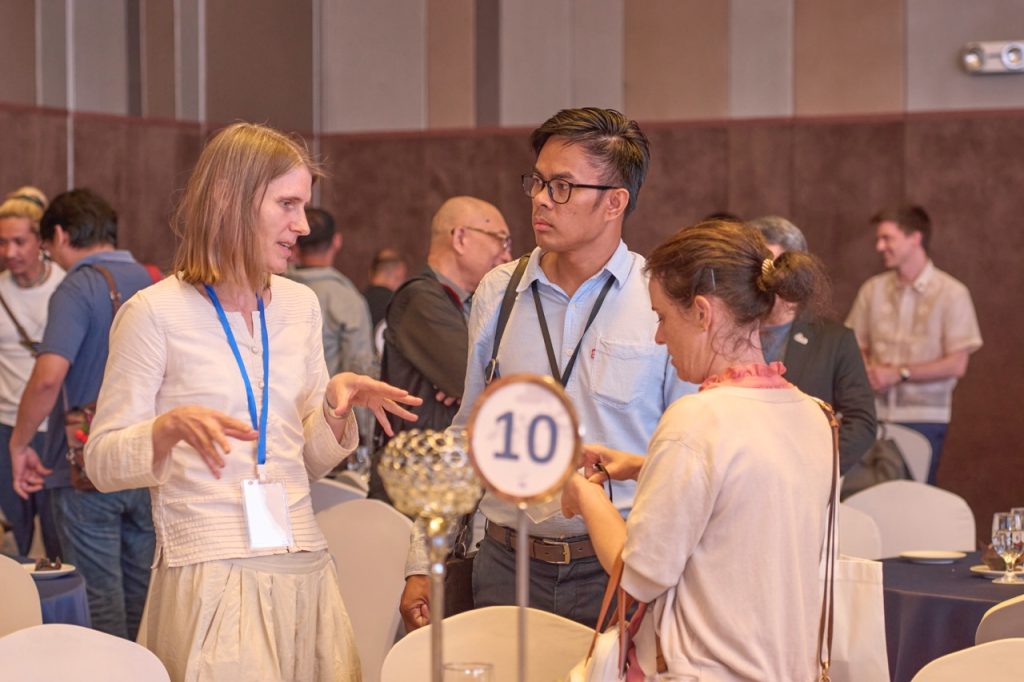
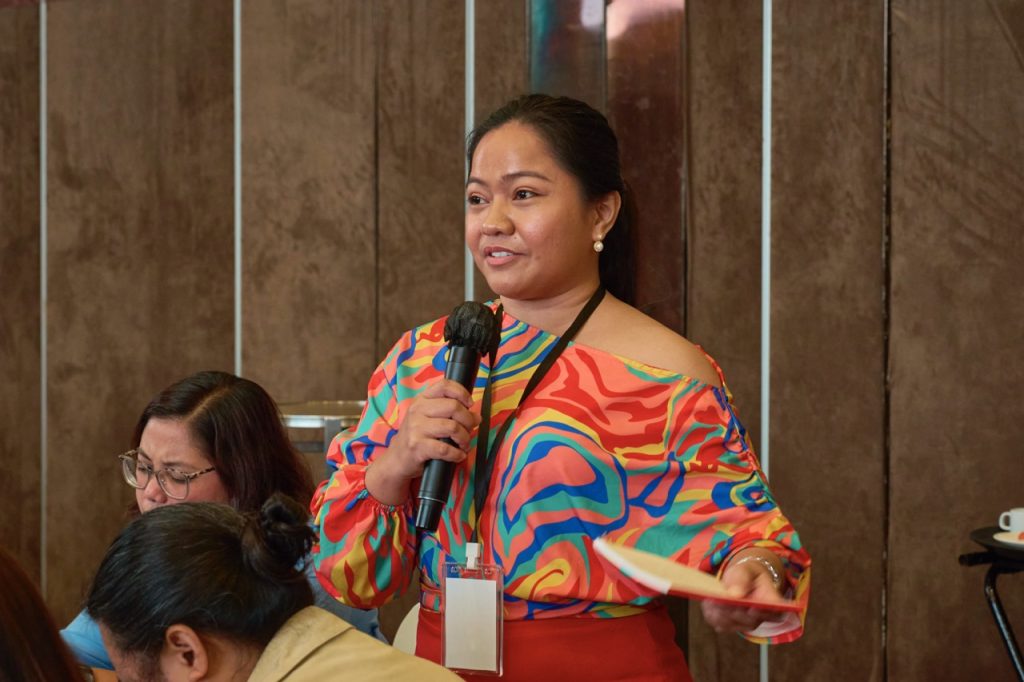
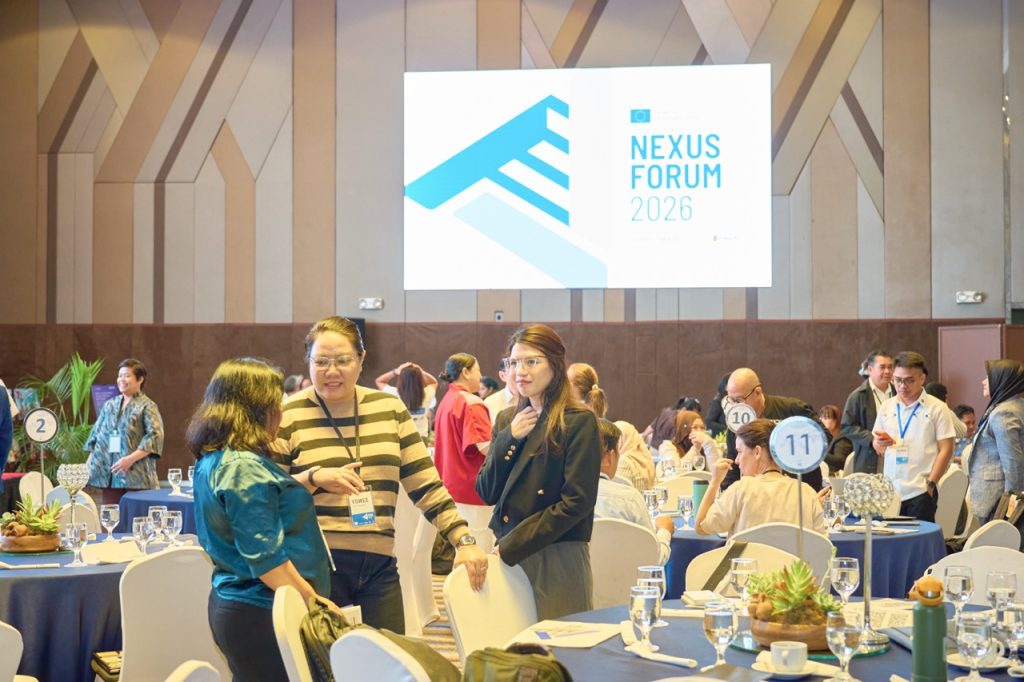
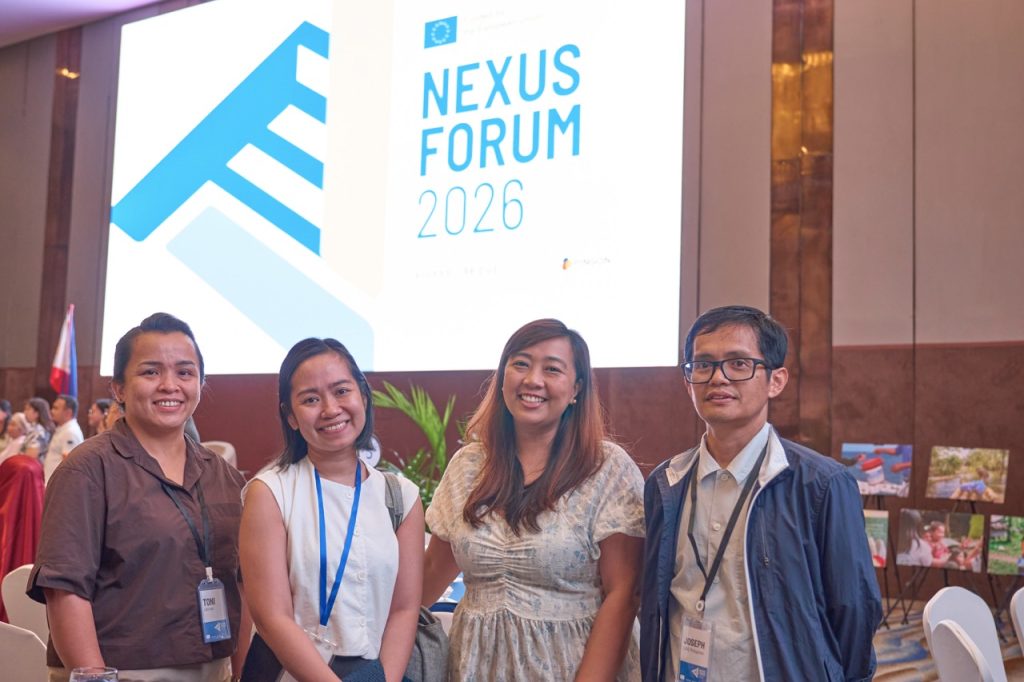
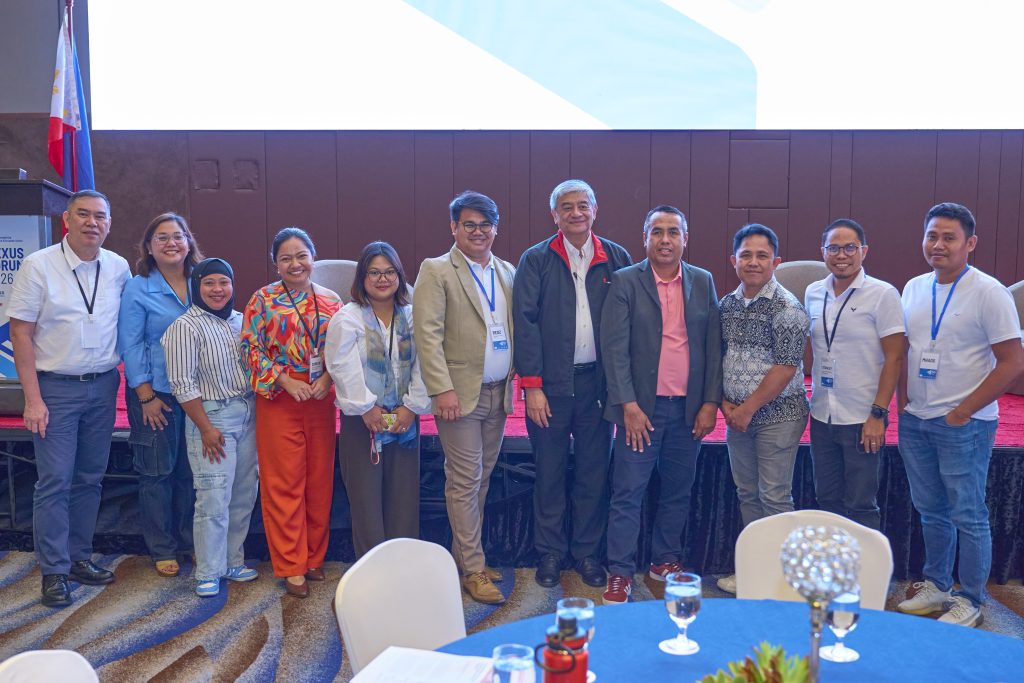
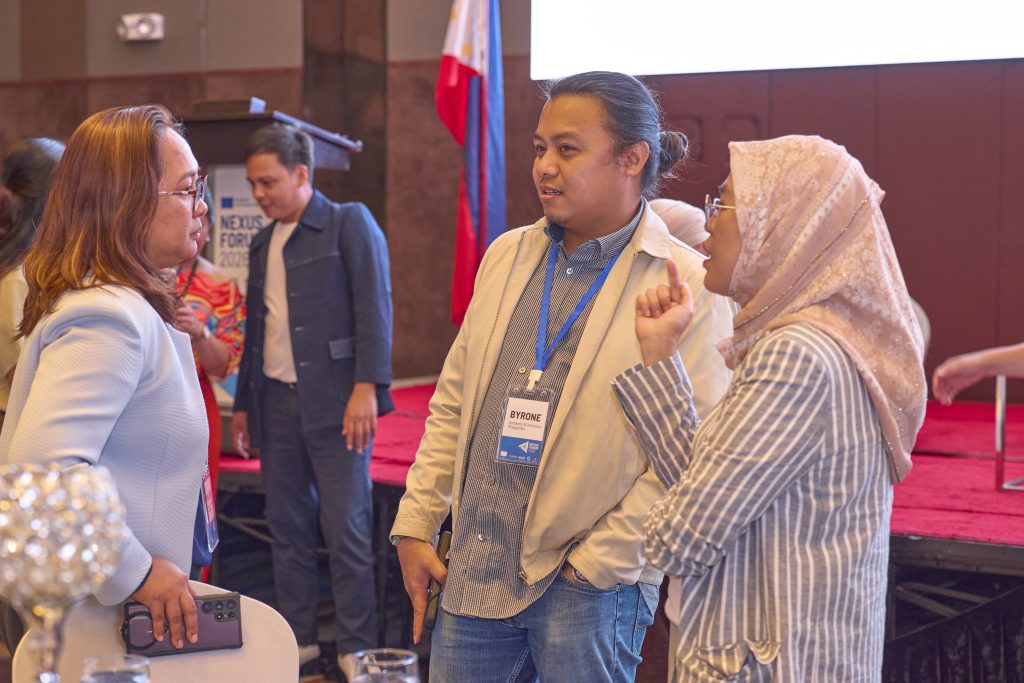
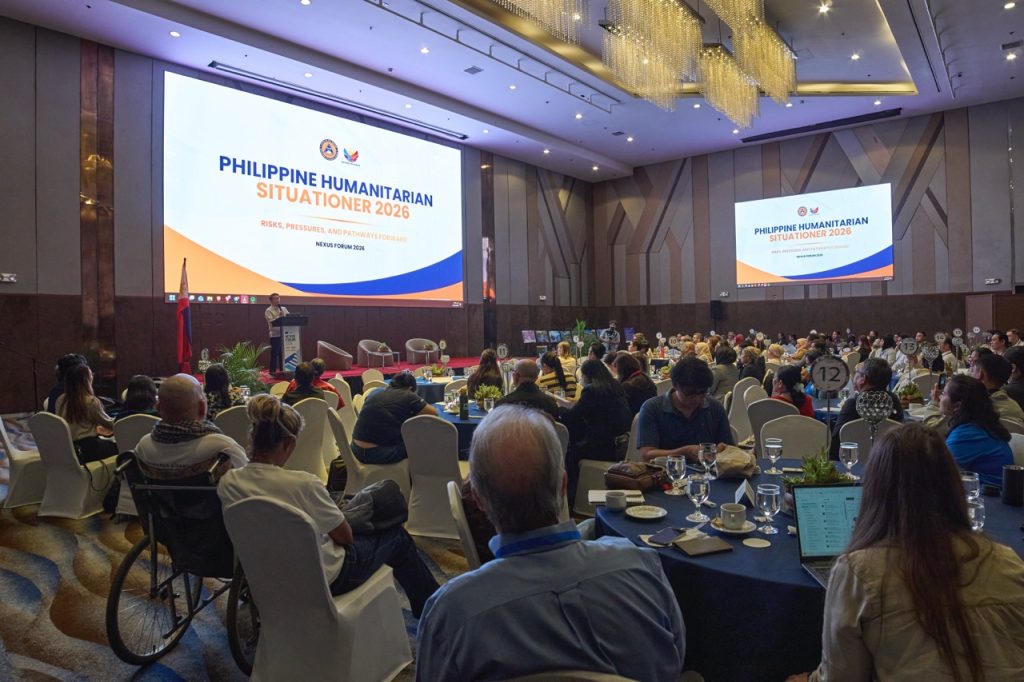
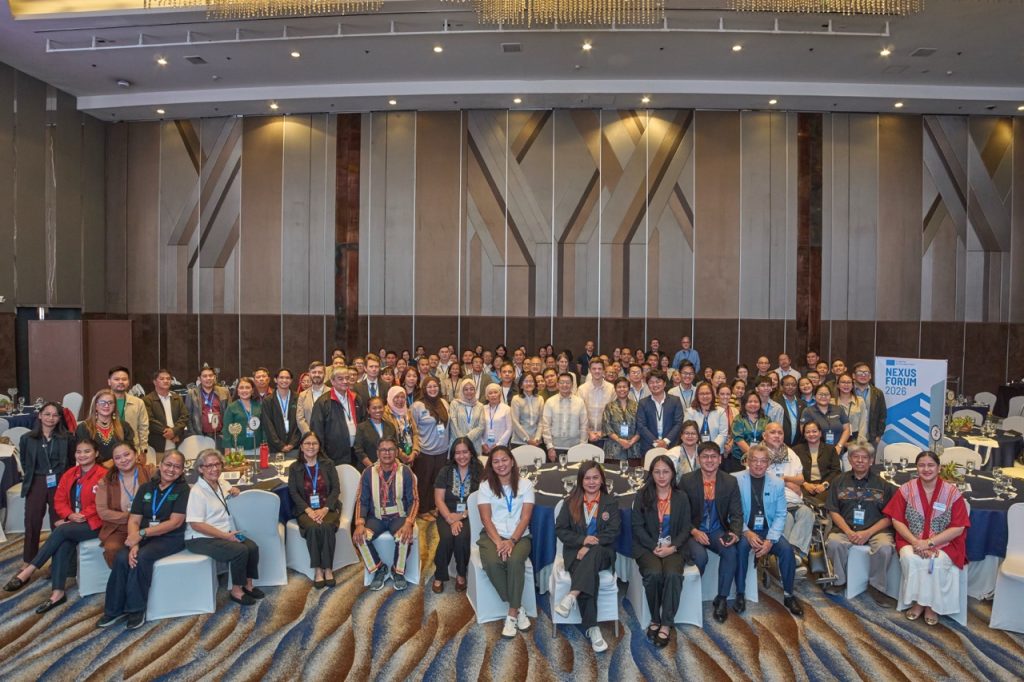
On March 25, 2026, representatives from government, civil society, and humanitarian organizations gathered to discuss how to better support communities facing overlapping risks.
Photos by Cindy Aquino for CARE Philippines
The Philippines faces increasingly frequent, overlapping, complex risks, even as aid budgets tighten globally. To keep up, humanitarians need to move faster and work more closely with each other and the people they serve.
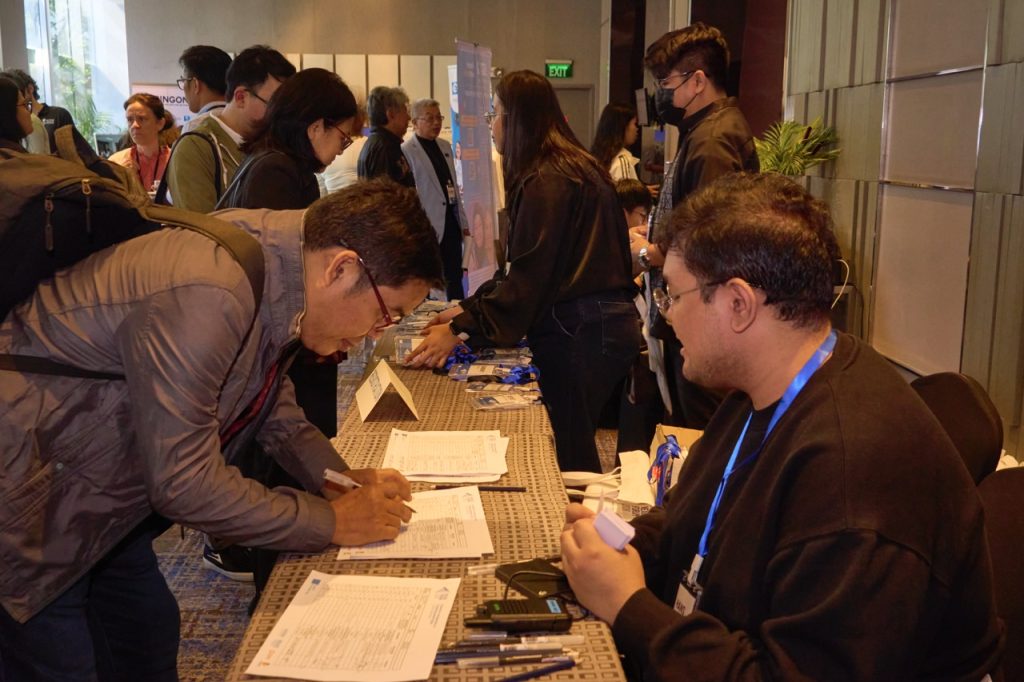
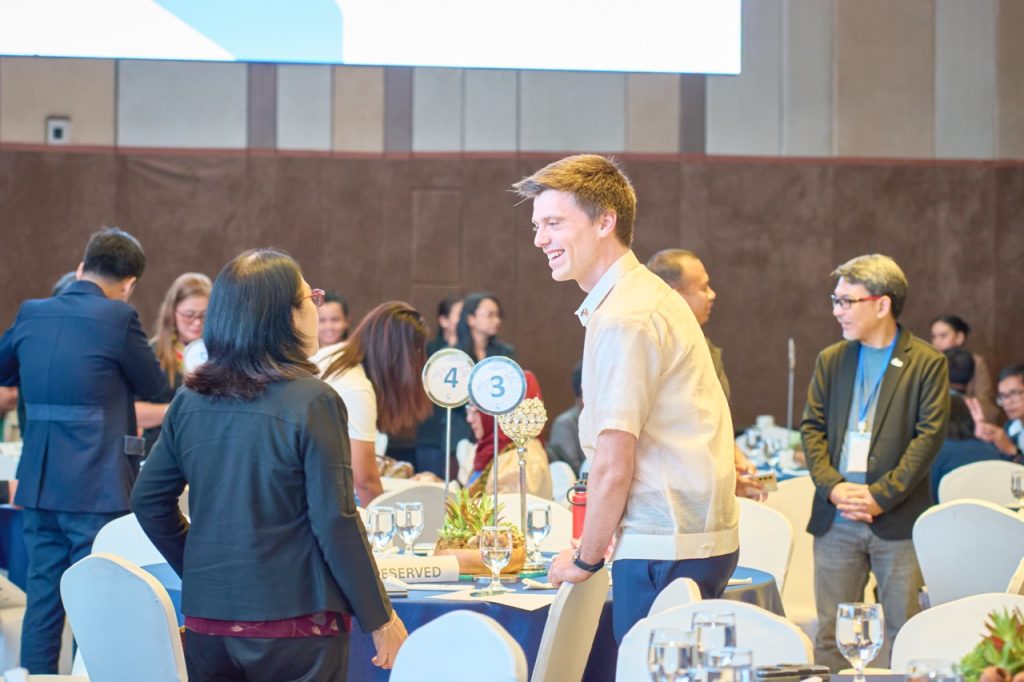
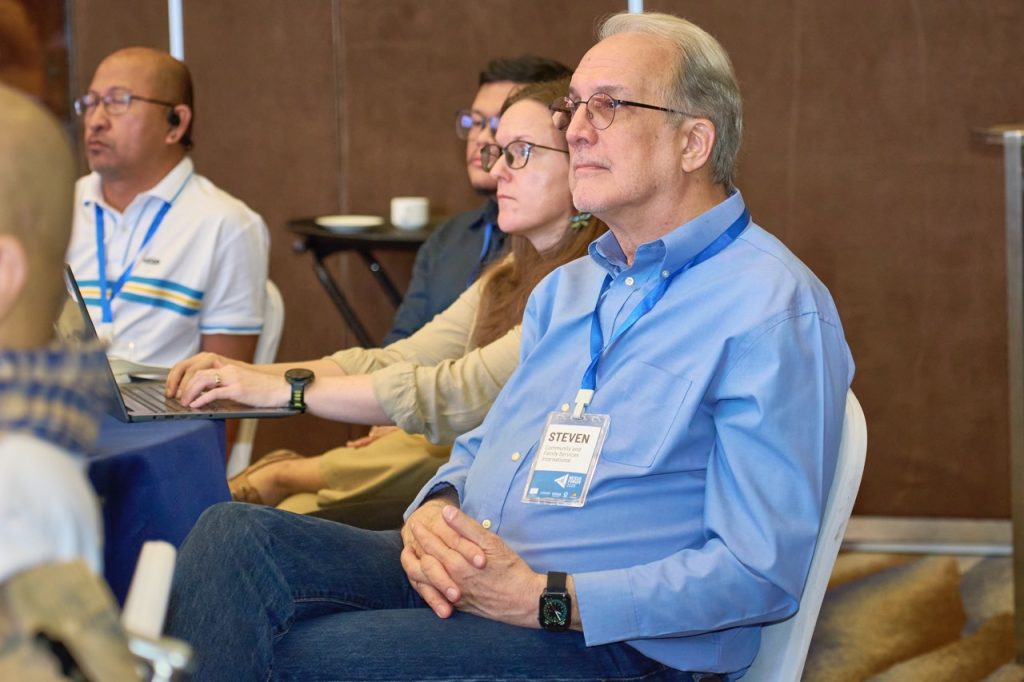
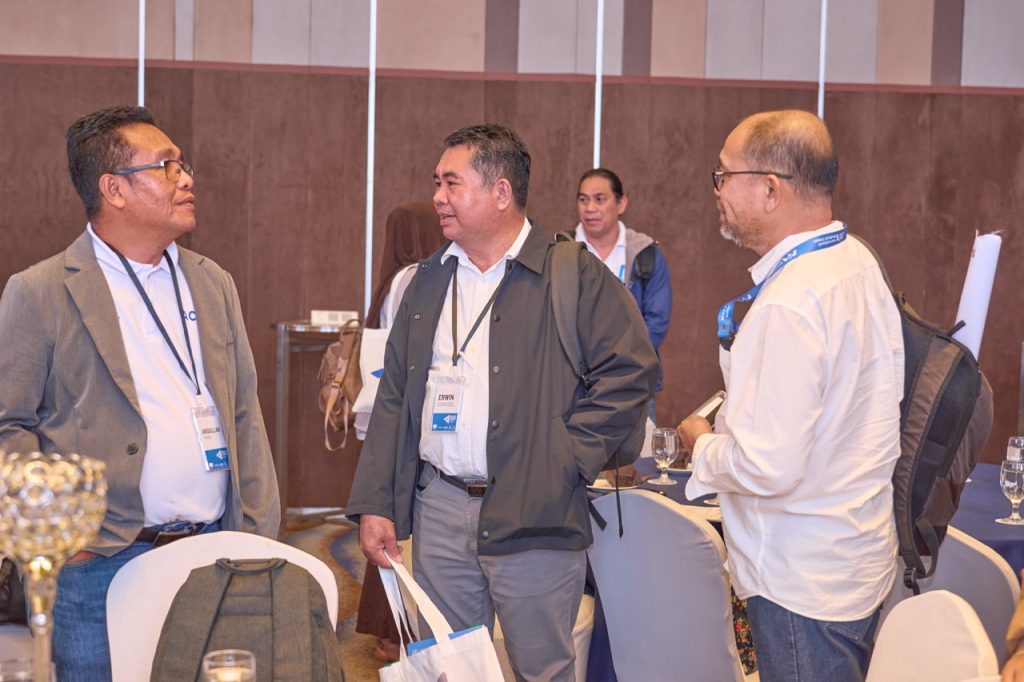
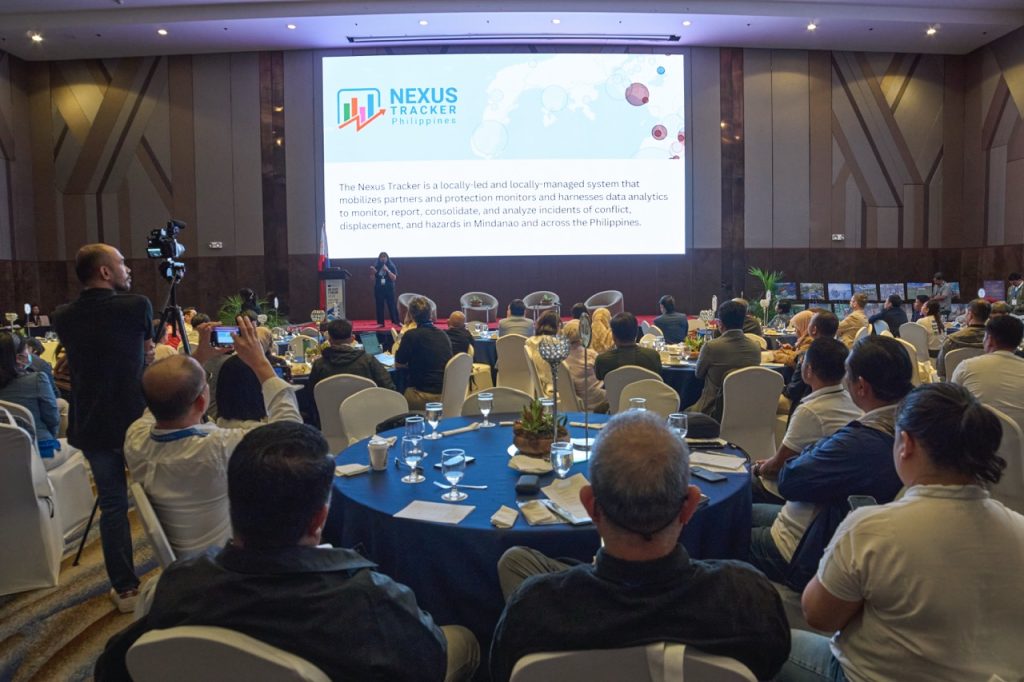
Against this backdrop, the Nexus Forum 2026 gathered more than 150 representatives from government, civil society, humanitarian networks and coordination bodies, technical experts, and the academe to discuss how the country’s humanitarian system can adapt.
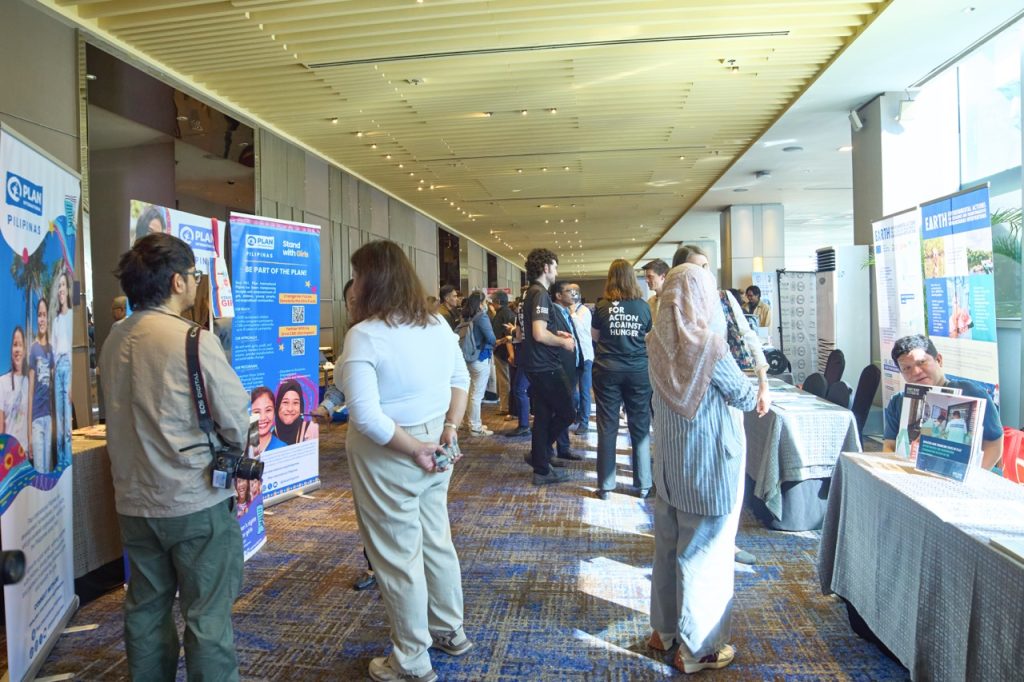
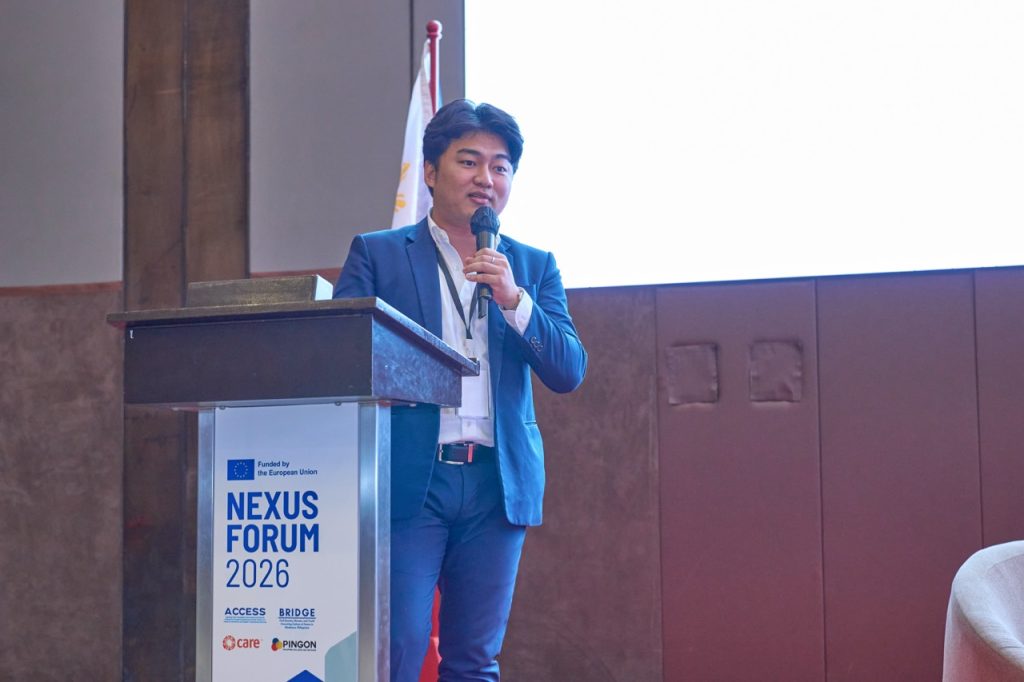
Convened by the organizations behind the EU-funded ACCESS and BRIDGE Projects, together with the Philippine Inclusive NGO Network (PINGON), the March 25, 2026 event featured plenary presentations, panel discussions, the launch of a data analytics platform, and an interactive exhibit space.
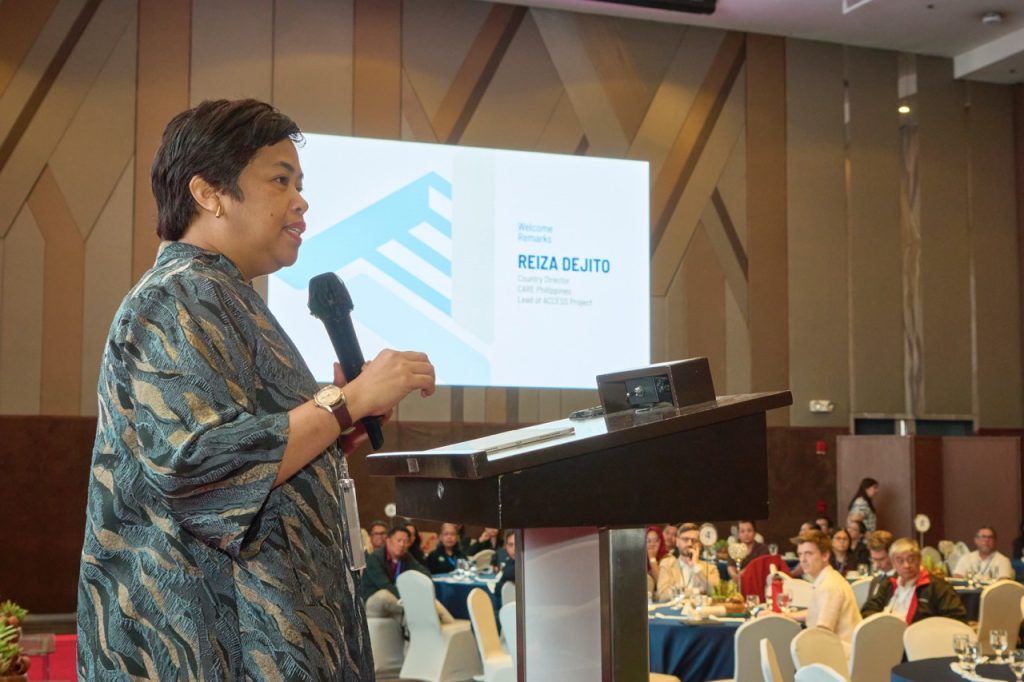
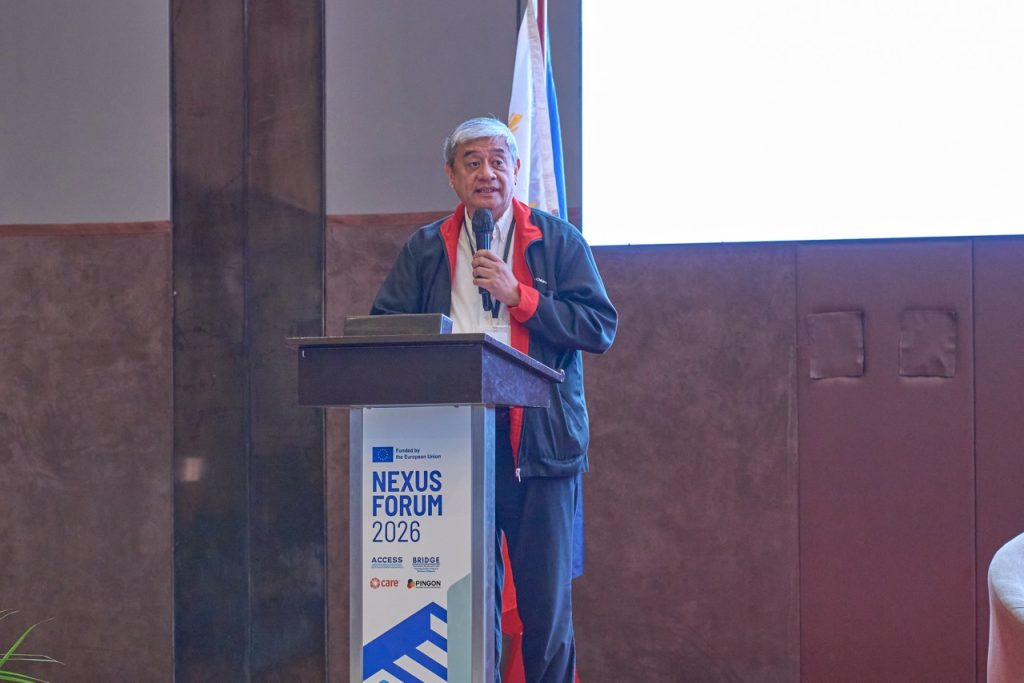
Reiza Dejito, CARE Philippines Country Director, opened the forum with a candid reflection: “The Nexus Forum is not a celebration or a showcase. It is a reckoning. It is a deliberate, honest, overdue conversation about whether the way we work is good enough for people depending on it. And if we are being honest, the answer is ‘not yet.’”
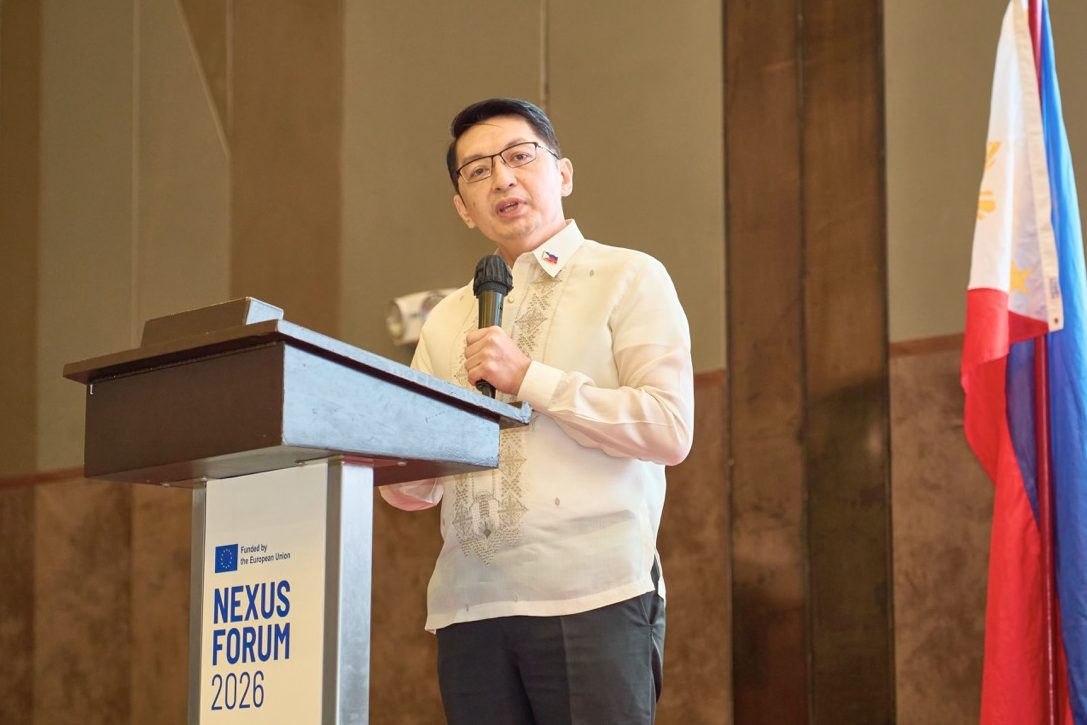
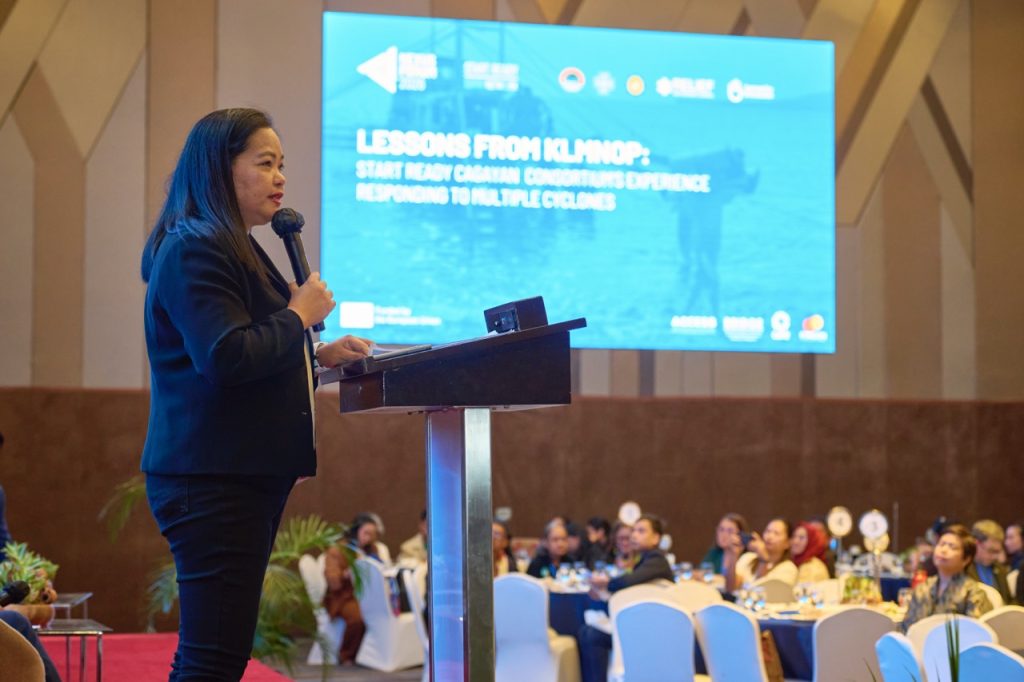
Reiza Dejito, CARE Philippines Country Director, delivers the opening remarks at Nexus Forum 2026.
Global shifts, local impacts
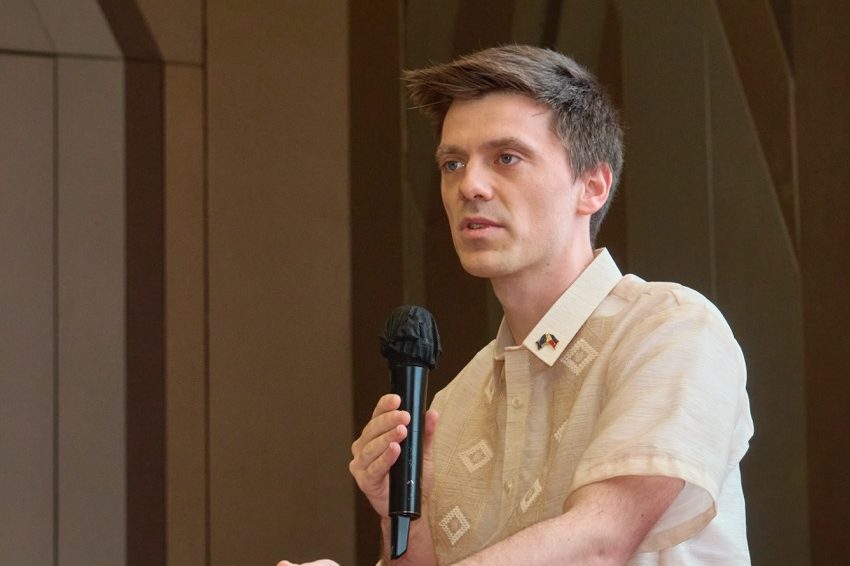
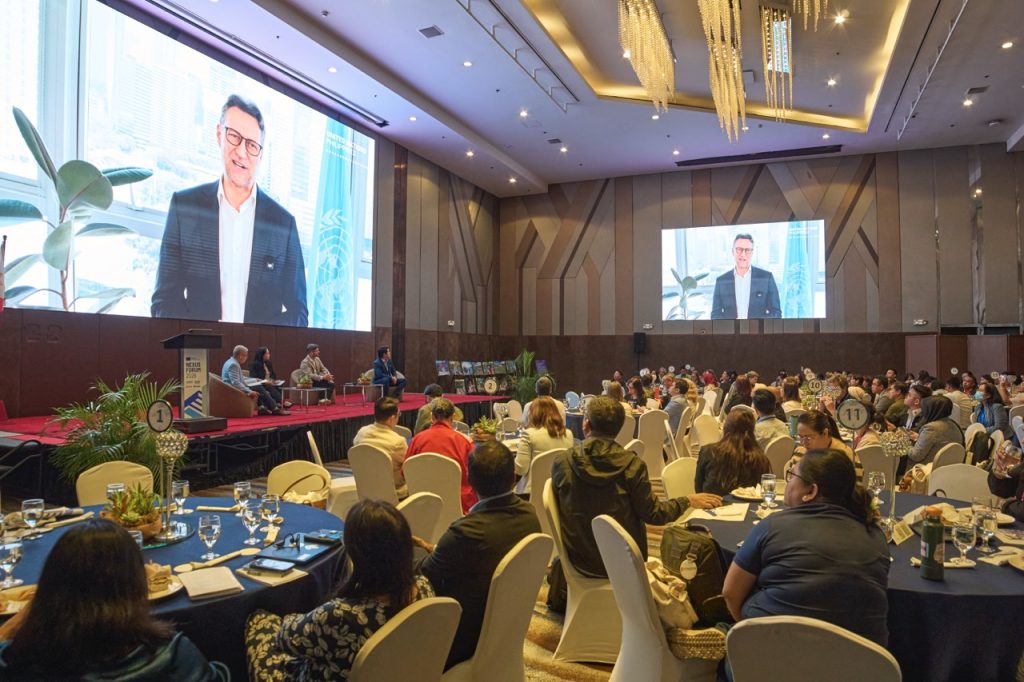
Following a message of solidarity from Théo Prestavoine of EU Humanitarian Aid, Office of Civil Defense spokesperson Emerito Junie Castillo set the stage with a Philippine humanitarian situationer, highlighting how climate extremes and global disruptions make local communities more vulnerable, and why humanitarian response needs to be more locally led and focused on resilience, not just reaction.
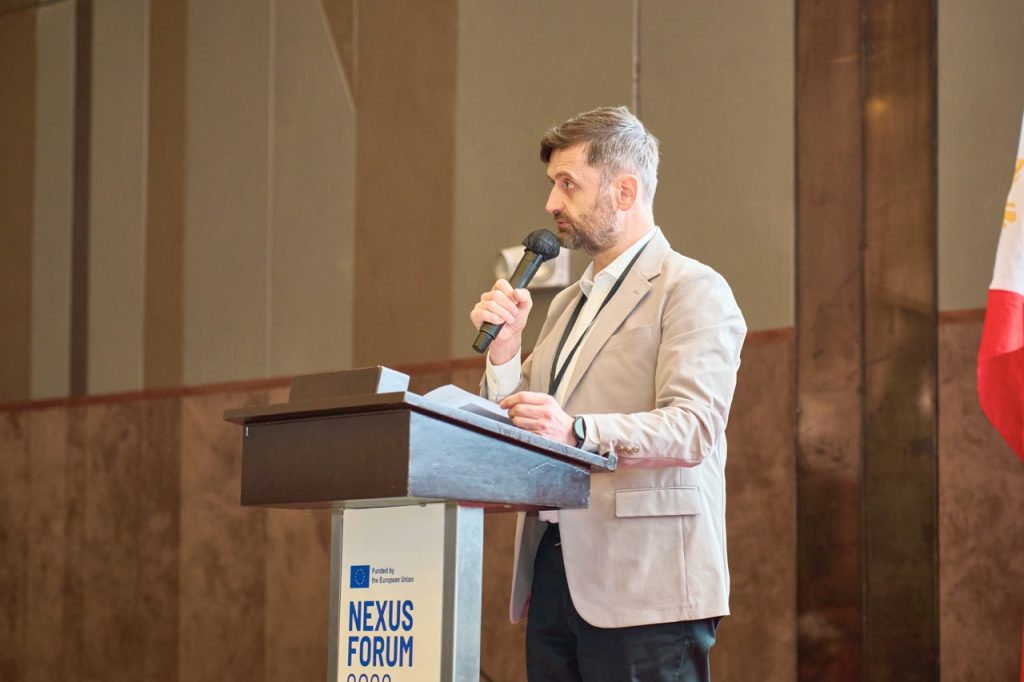
Théo Prestavoine, Desk Officer for Bangladesh and the Philippines, EU Humanitarian Aid
Office of Civil Defense Spokesperson Emerito Junie Castillo
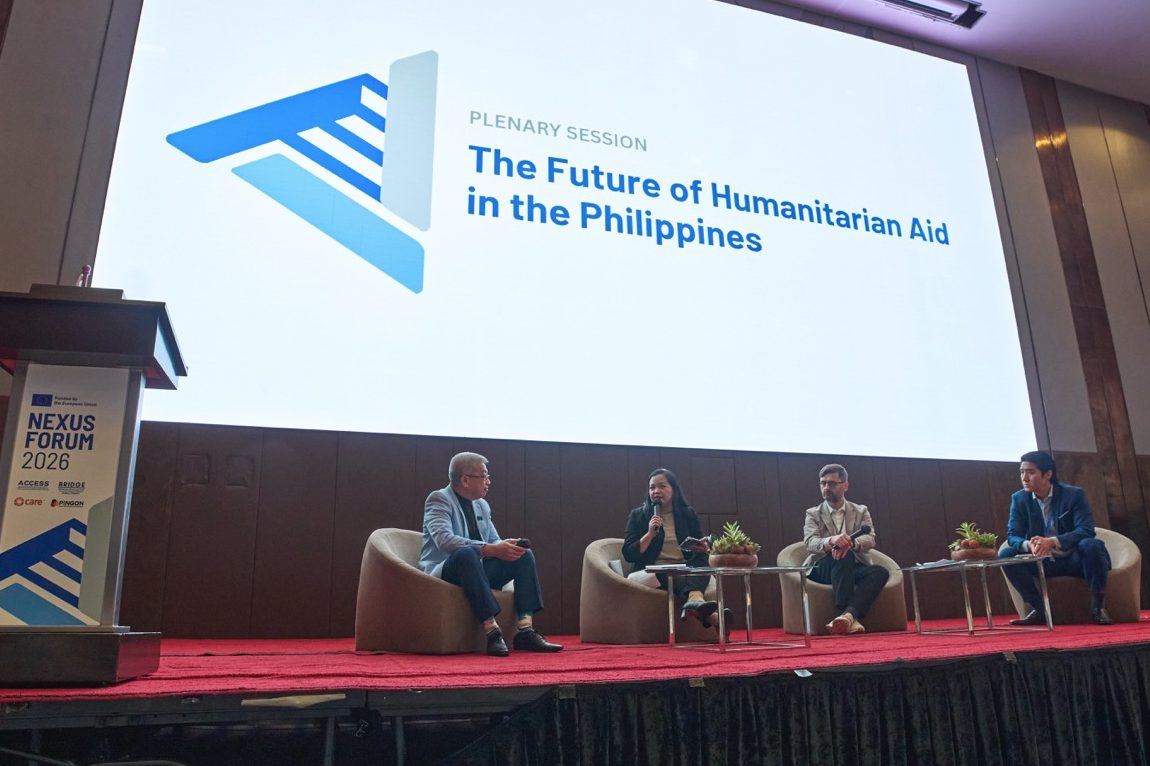
This set the tone for a panel discussion on the future of humanitarian aid, which explored global and regional trends shaping local contexts.
Moderated by DRRM Specialist Juan Blenn Huelgas, the session drew insights from Director Christopher Mathay (Disaster Response Management Bureau – Department of Social Welfare and Development), Arnaud Peral (United Nations Resident Coordinator in the Philippines), Pascal Arthaud (PINGON and People in Need), and Noemi Cabaddu (St. Paul University Philippines – Community Development Center Foundation).
The speakers emphasized three priorities: communities must lead, preparedness needs greater investment, and coordination across actors must improve.
Christopher Mathay, Director III, Disaster Response Management Bureau, DSWD
Juan Blenn Huelgas, DRRM Specialist, Nexus Forum 2026 moderator
Pascal Arthaud, Country Director of People in Need and Vice-Chairperson of the Philippine Inclusive NGO Network (PINGON)
Noemi Cabaddu, Executive Director, St. Paul University Philippines – Community Development Center Foundation
Arnaud Peral, United Nations Resident Coordinator in the Philippines
Lessons in coordination, anticipatory action, and peacebuilding
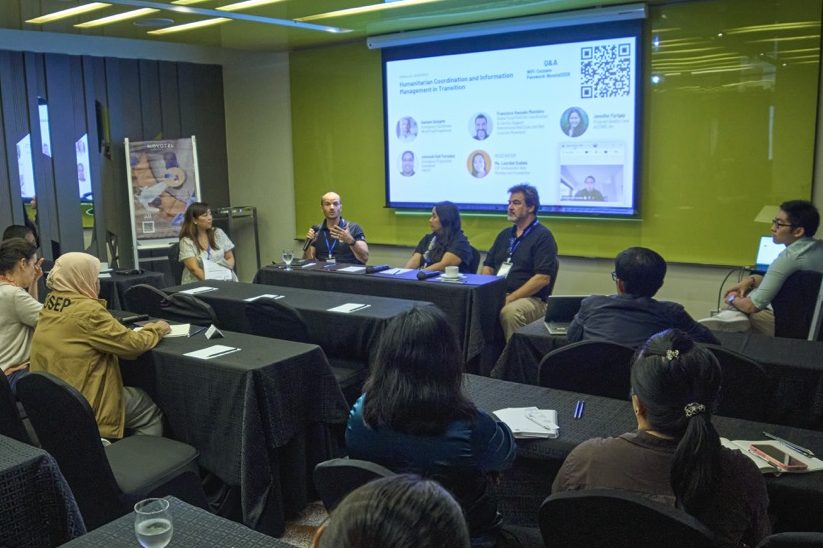
Panel discussions on key topics centered around gaps, challenges, and ways forward.
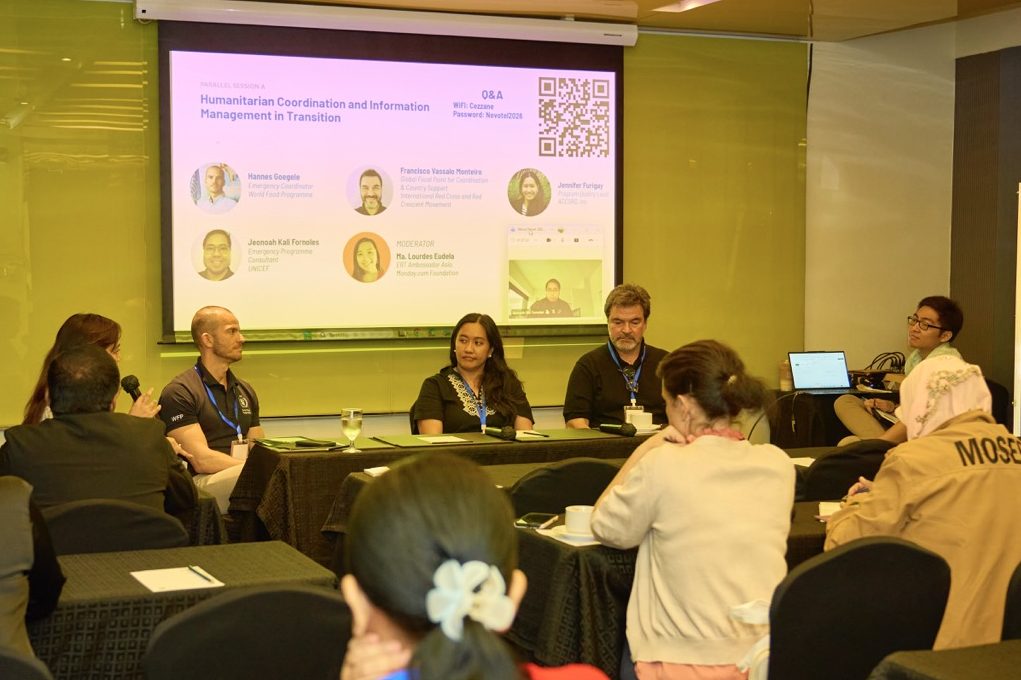
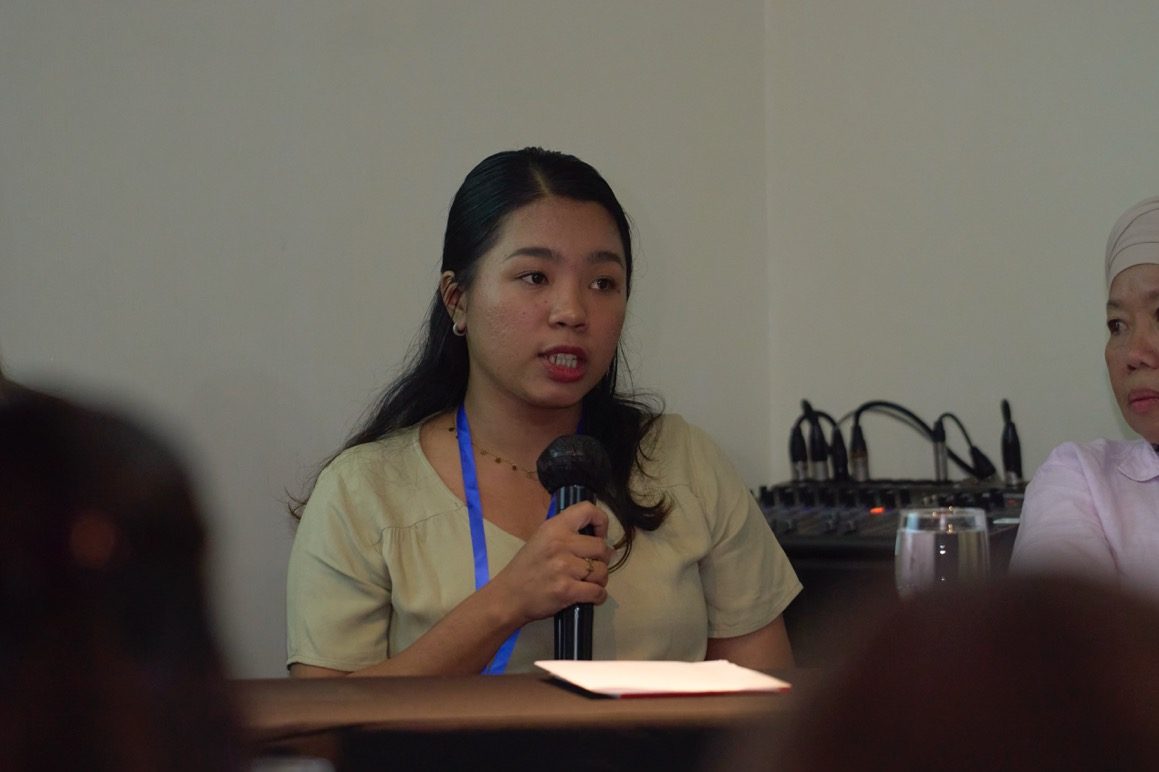
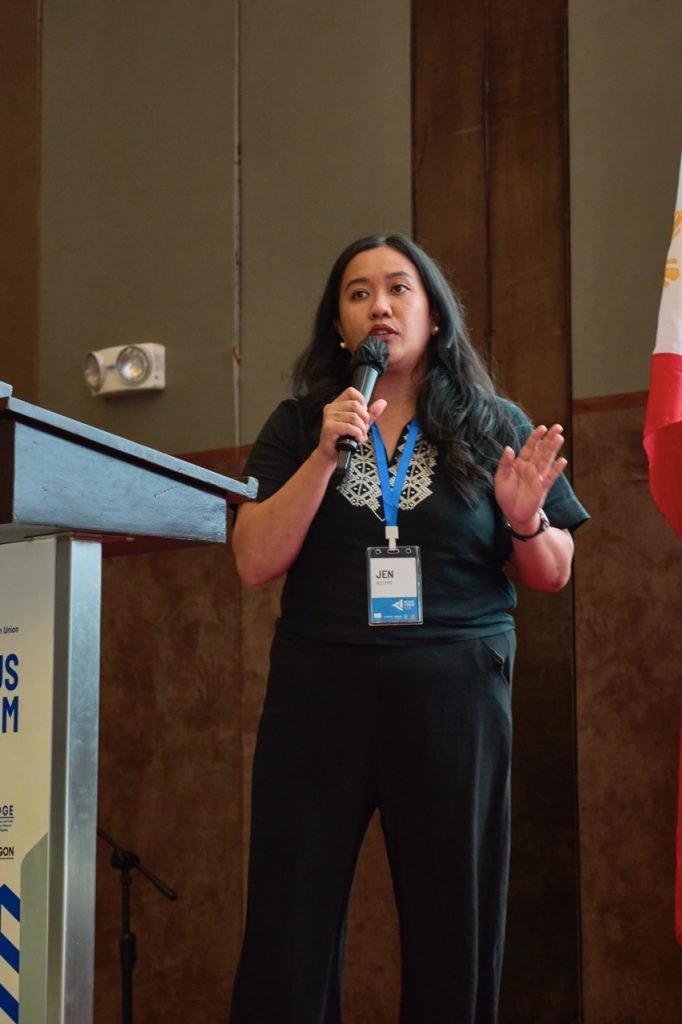
On coordination and information management, Hannes Goegele (World Food Programme), Jeonoah Kali Fornoles (UNICEF), Francisco Vassalo Monteiro (IFRC), Jennifer Furigay (ACCORD), and Ma. Lourdes Eudela (Monday.com Foundation) examined how organizations and systems are adapting to changing risks and coordination mechanisms.
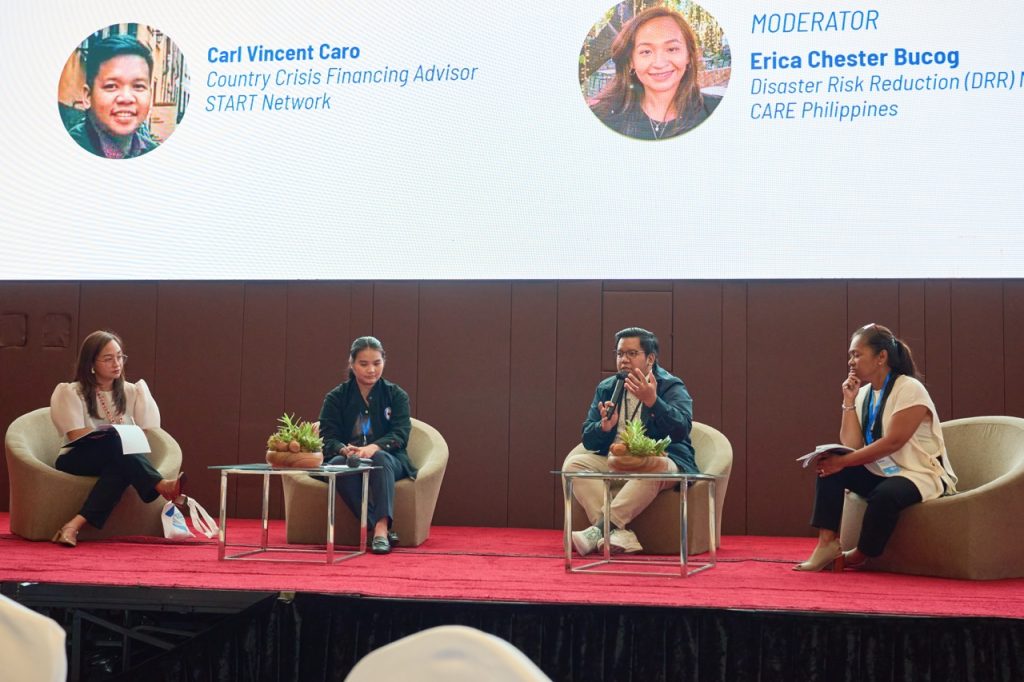
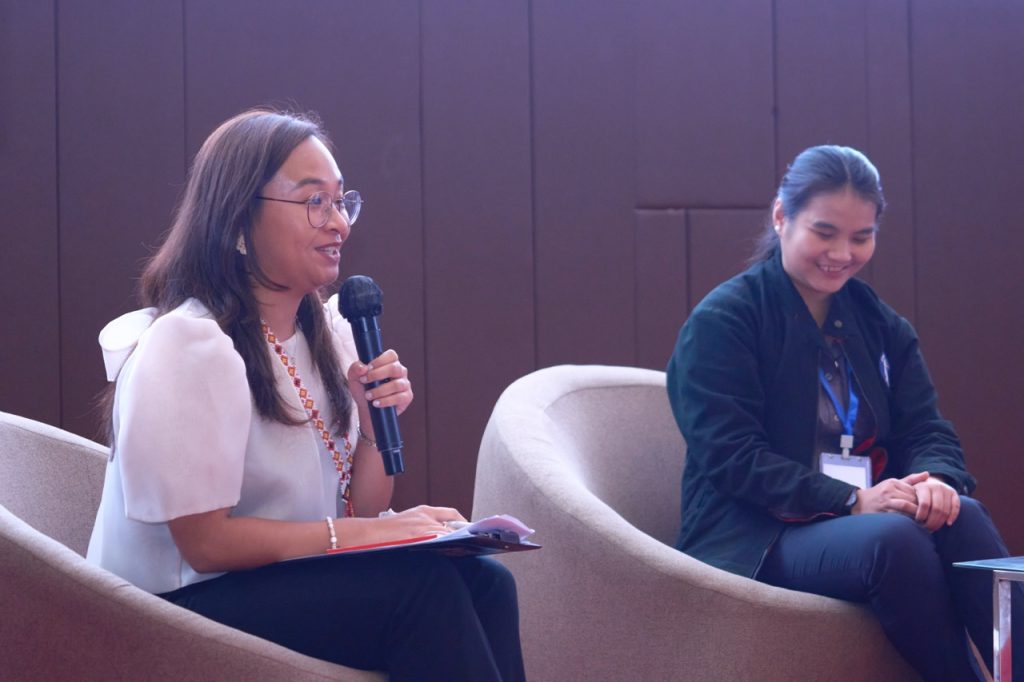
A separate discussion on anticipatory action, with Ruth Honculada-Georget (Food and Agriculture Organization of the United Nations), Criselda Longga (Philippine Red Cross), Arvin Caro (Start Network), and Erica Chester Bucog (CARE Philippines), focused on the realities of turning forecasts into early action, including challenges in data, financing, and coordination.
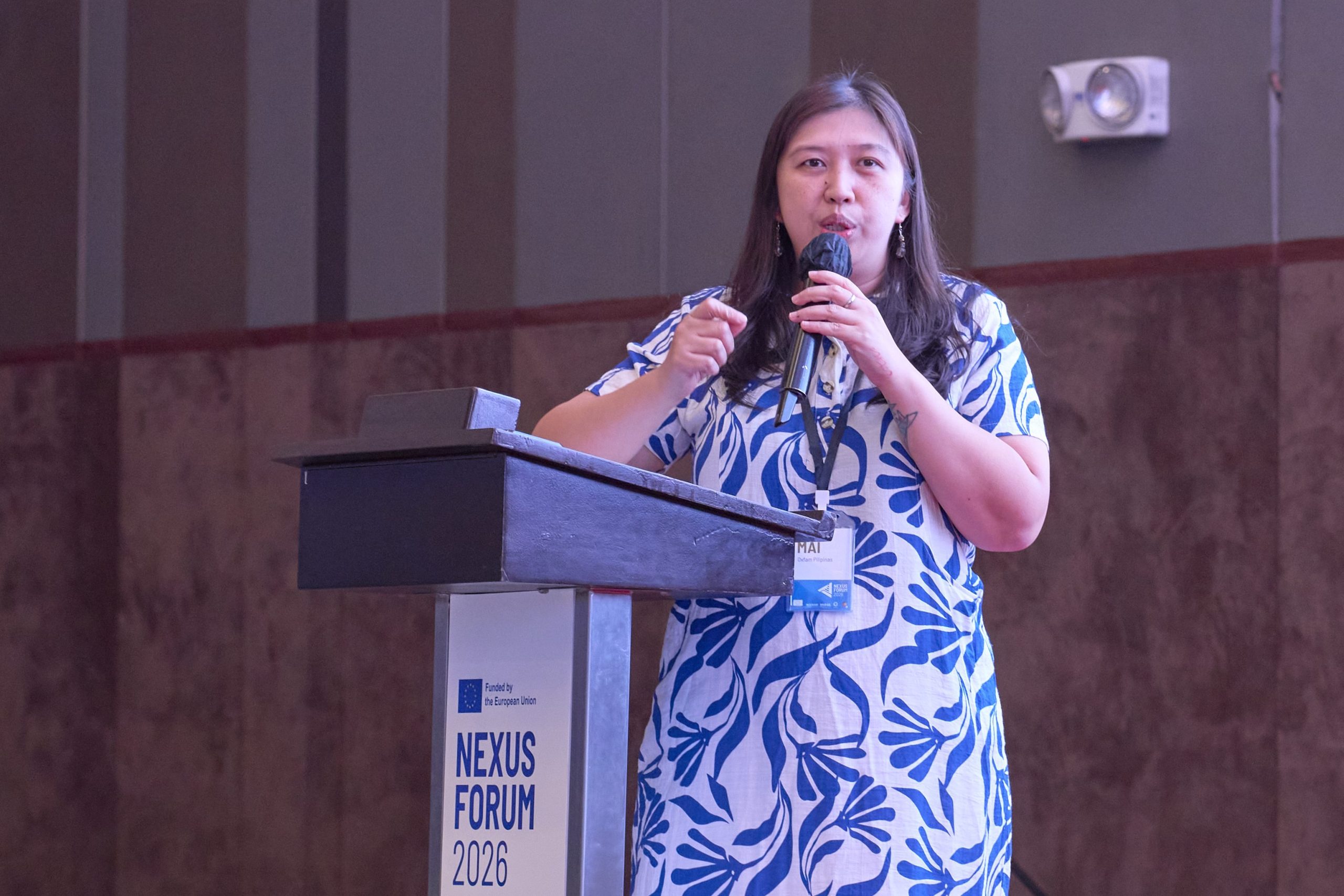
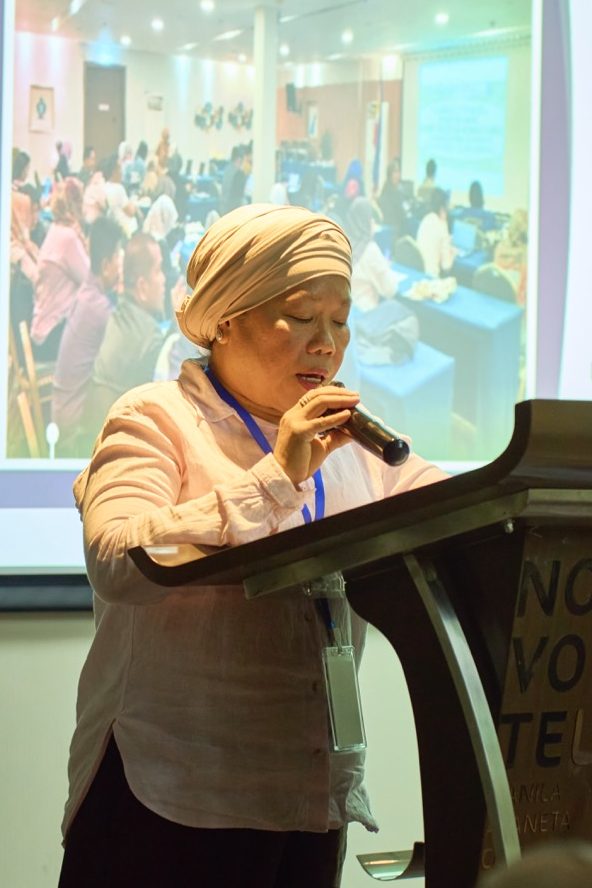
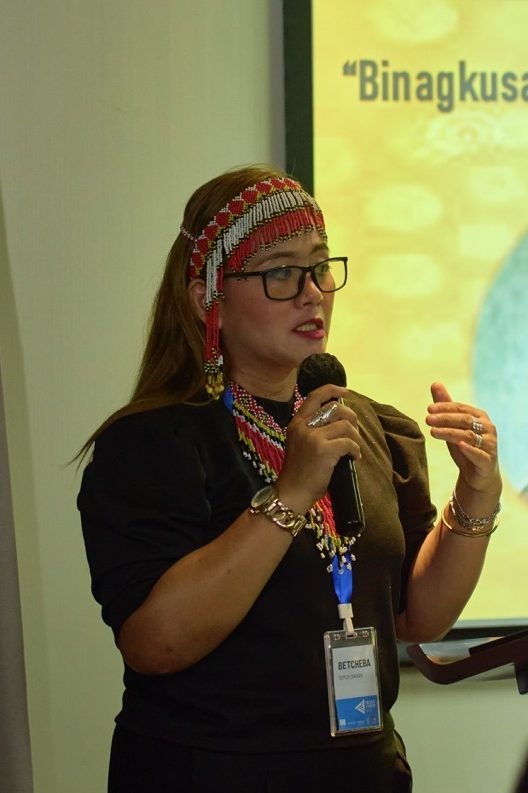
In a session on peacebuilding, Noraida Abo (United Youth of the Philippines – Women), Betcheba Ellorico Prochina (Department of Education, Agusan del Sur), Maricar Tiban (South Upi National High School), and Mai Lagman (Oxfam Pilipinas) shared how indigenous and Bangsamoro communities navigate conflict and natural hazards, and how women, youth, and culture can bridge humanitarian, development, and peace efforts.
Strengthening existing systems
Across all discussions, common challenges emerged:
Systems struggle to keep pace with increasingly complex and overlapping risks, with data often fragmented and difficult to share and use to make timely decisions
Preparedness is widely recognized as essential, but remains unevenly resourced and not consistently institutionalized
Local actors already lead response and recovery efforts, but are not always adequately supported by coordination, financing, and decision-making structures
These point less to a need for new systems, and more to making existing ones work better through stronger coordination, sustained investment in preparedness, and decisions grounded closer to communities.
Launch: Nexus Tracker
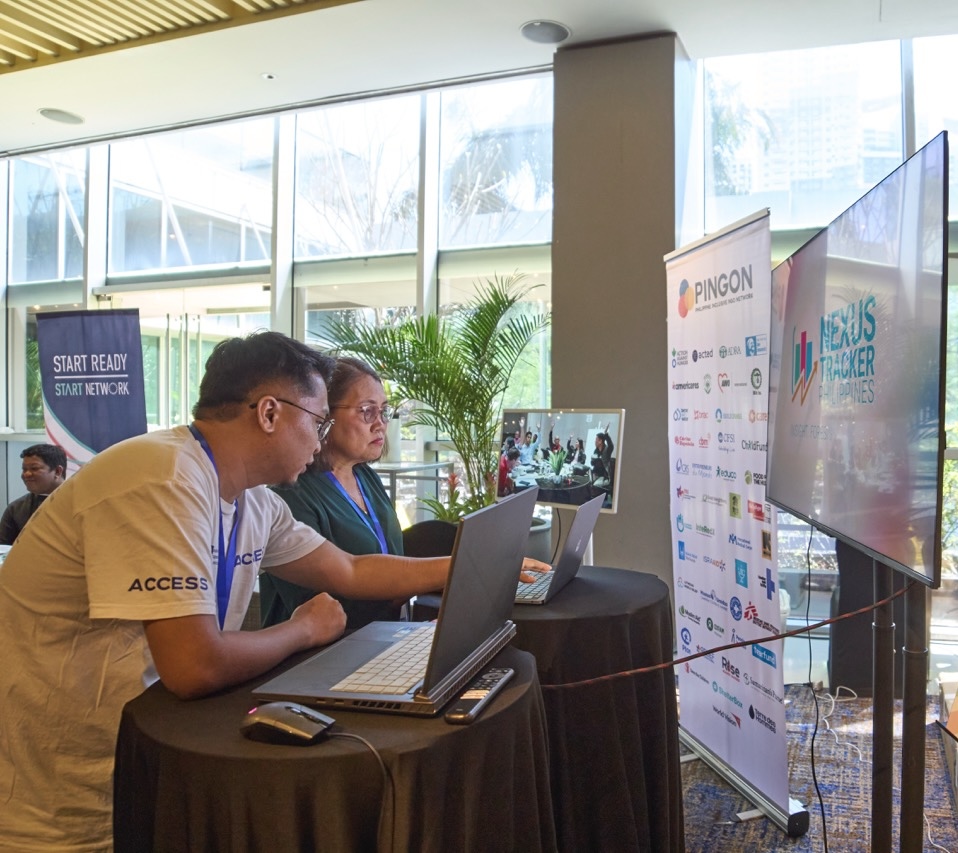
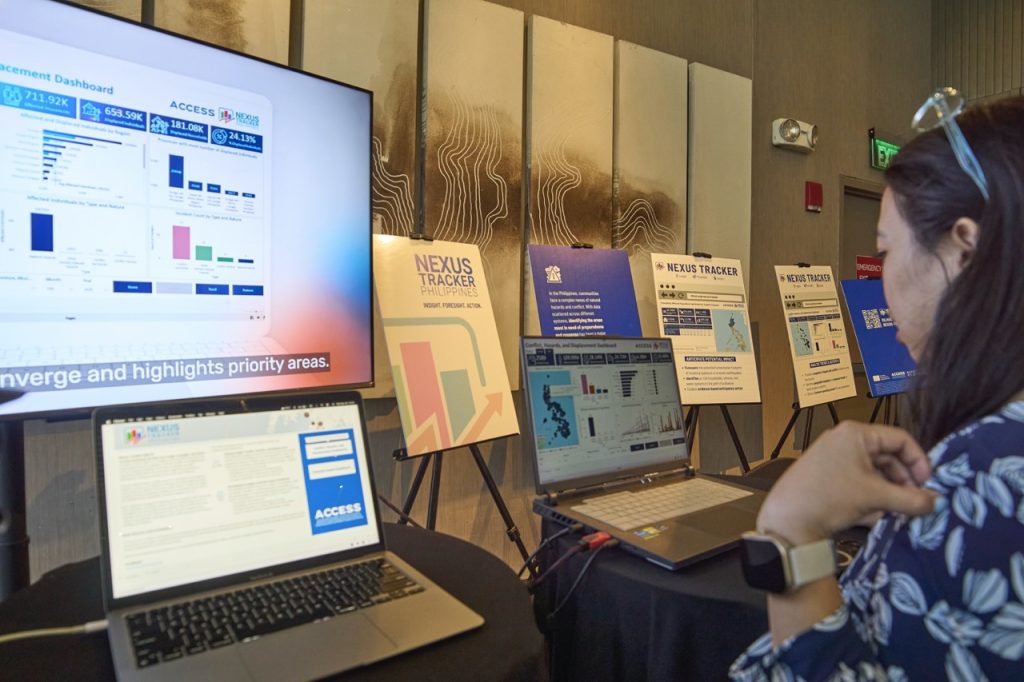
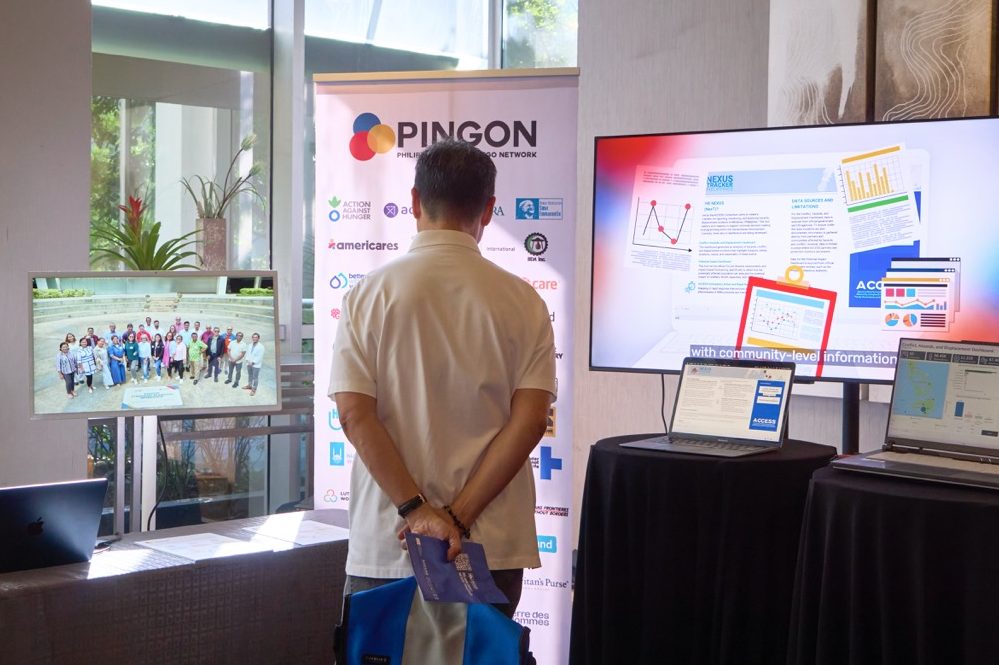
The forum also marked the introduction of the Nexus Tracker, a platform that uses data analytics to understand hazards – such as typhoons, flooding, and conflict – and displacement across the country.
Originally built for use within ACCESS, with ACCORD leading its development, the tool is being shared with the wider humanitarian community to support shared situational awareness and timelier, coordinated interventions.
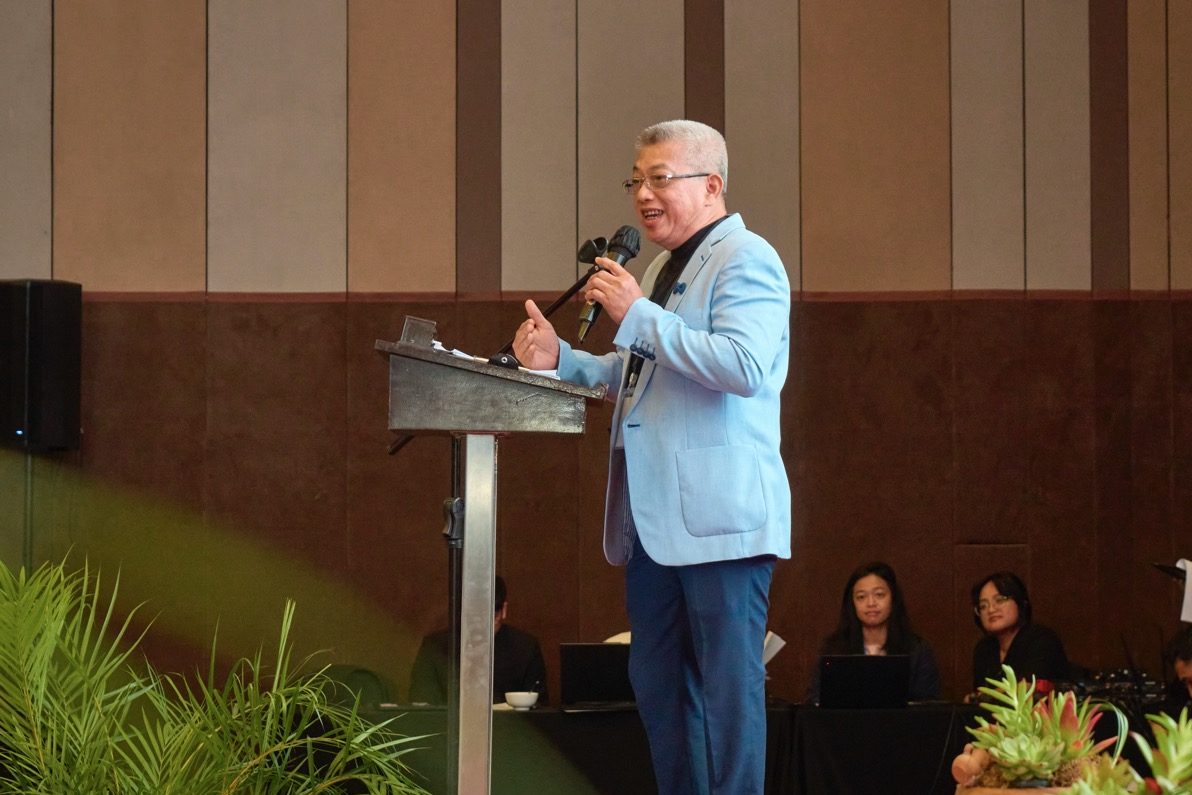
Jennifer Furigay, Program Quality Lead at ACCORD, presents the Nexus Tracker
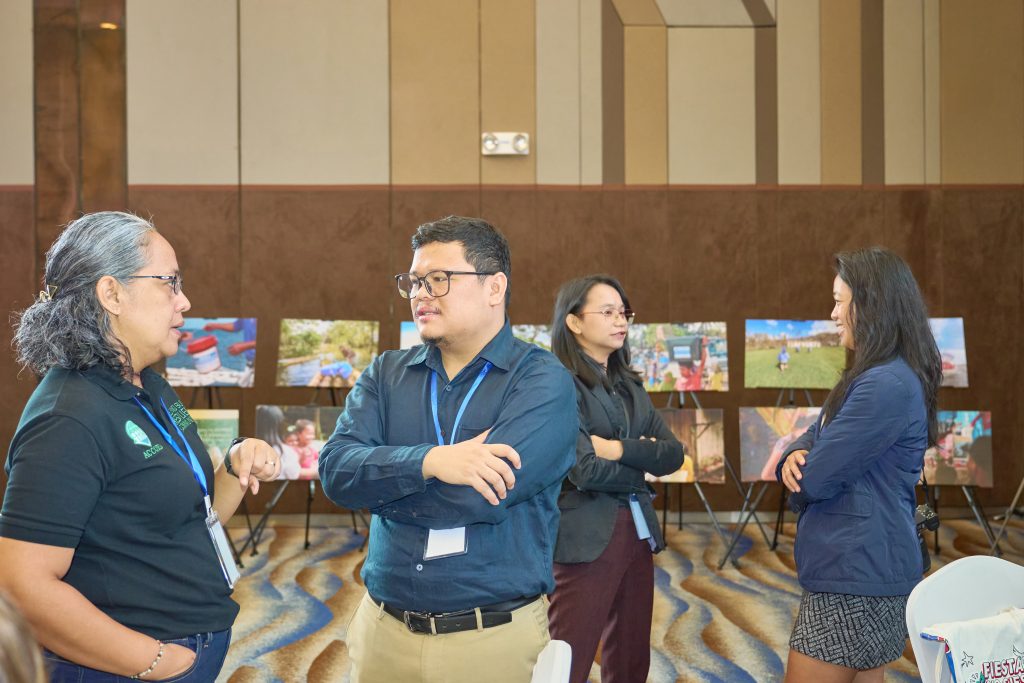
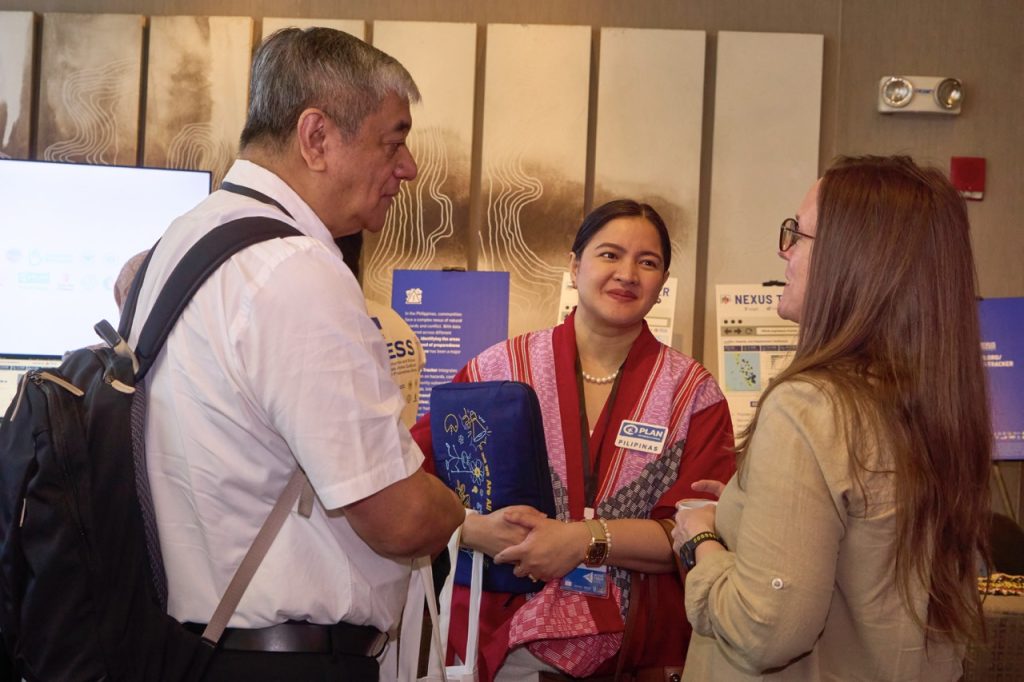
Learning and exchange at the Nexus Space exhibit hall
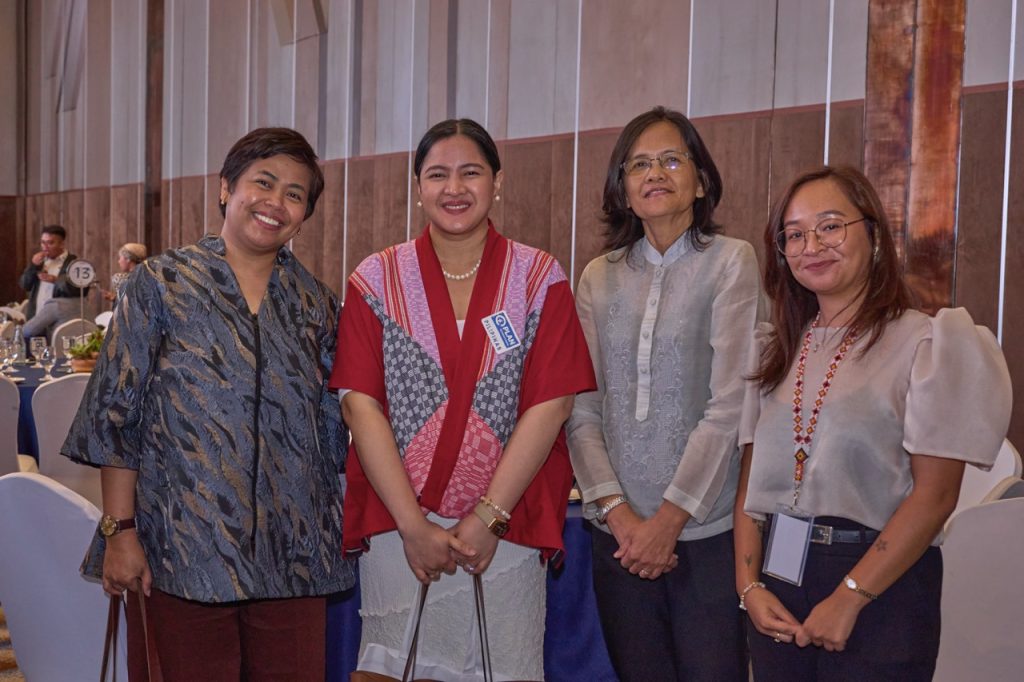
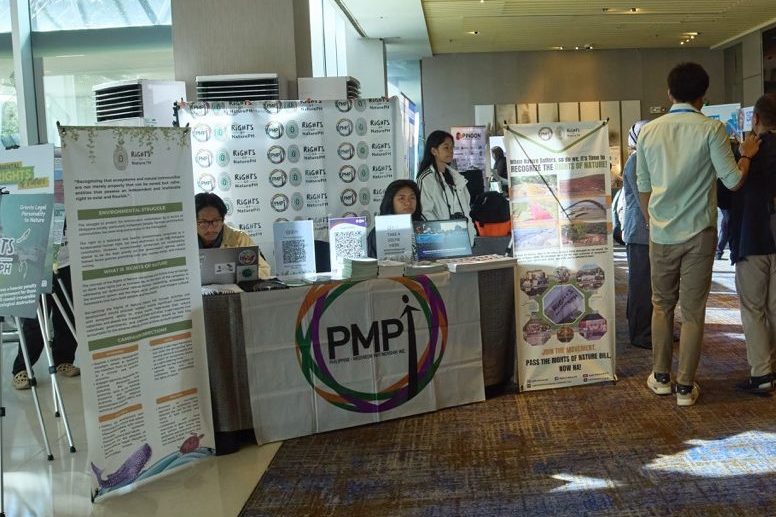
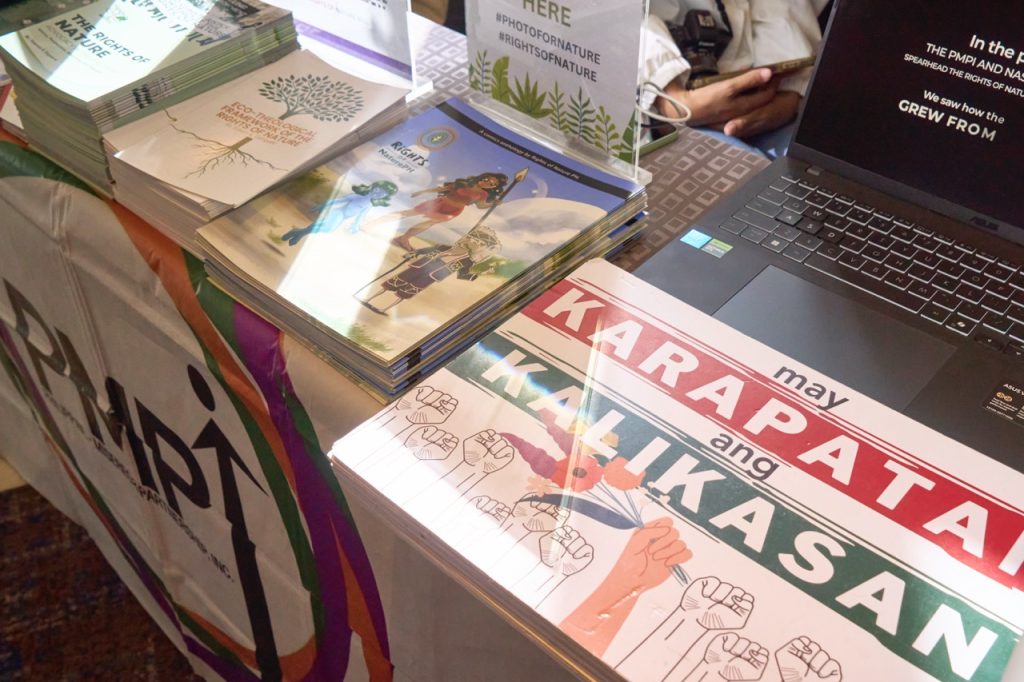
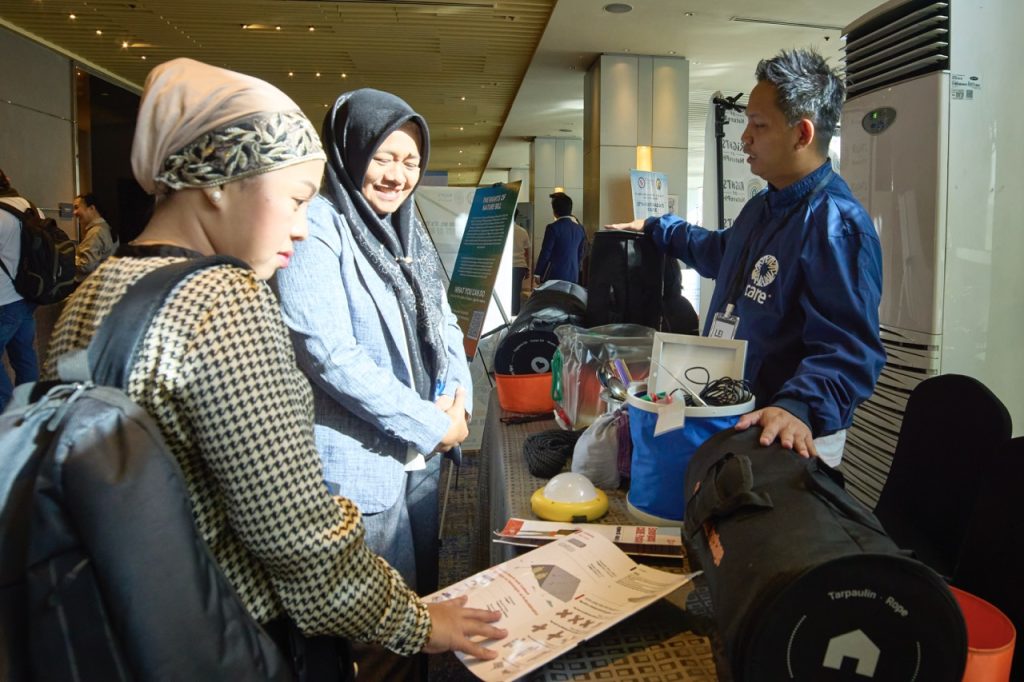
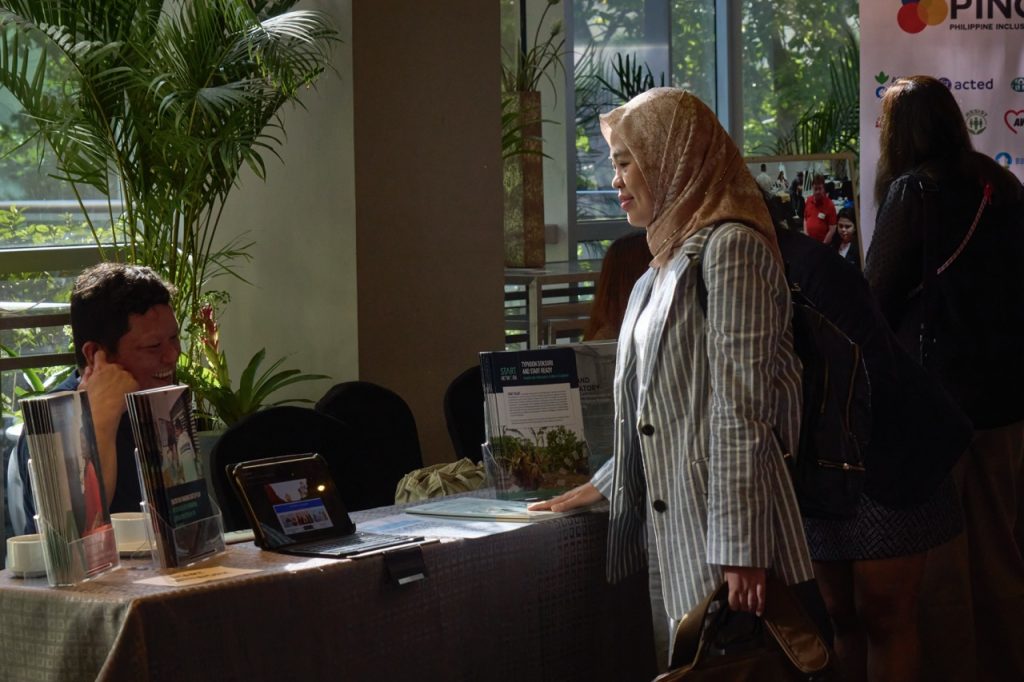
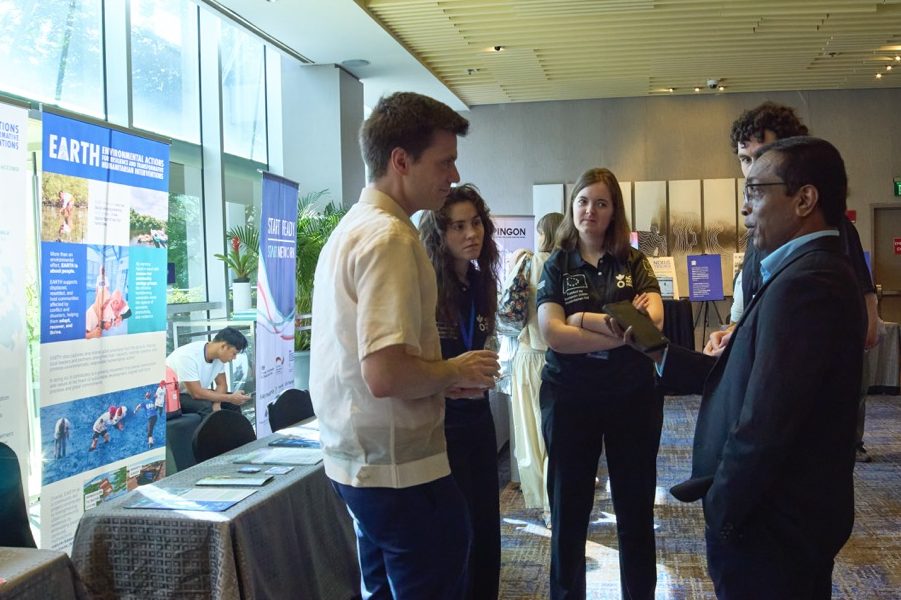
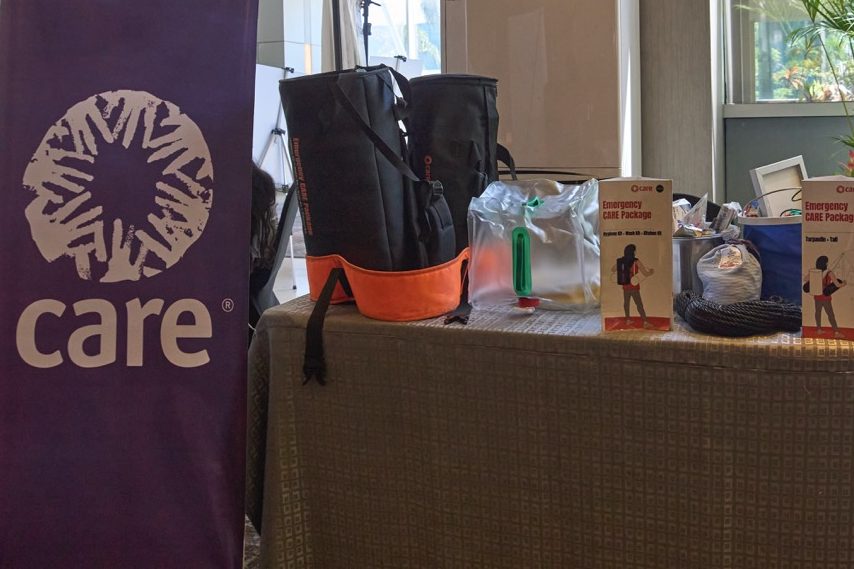
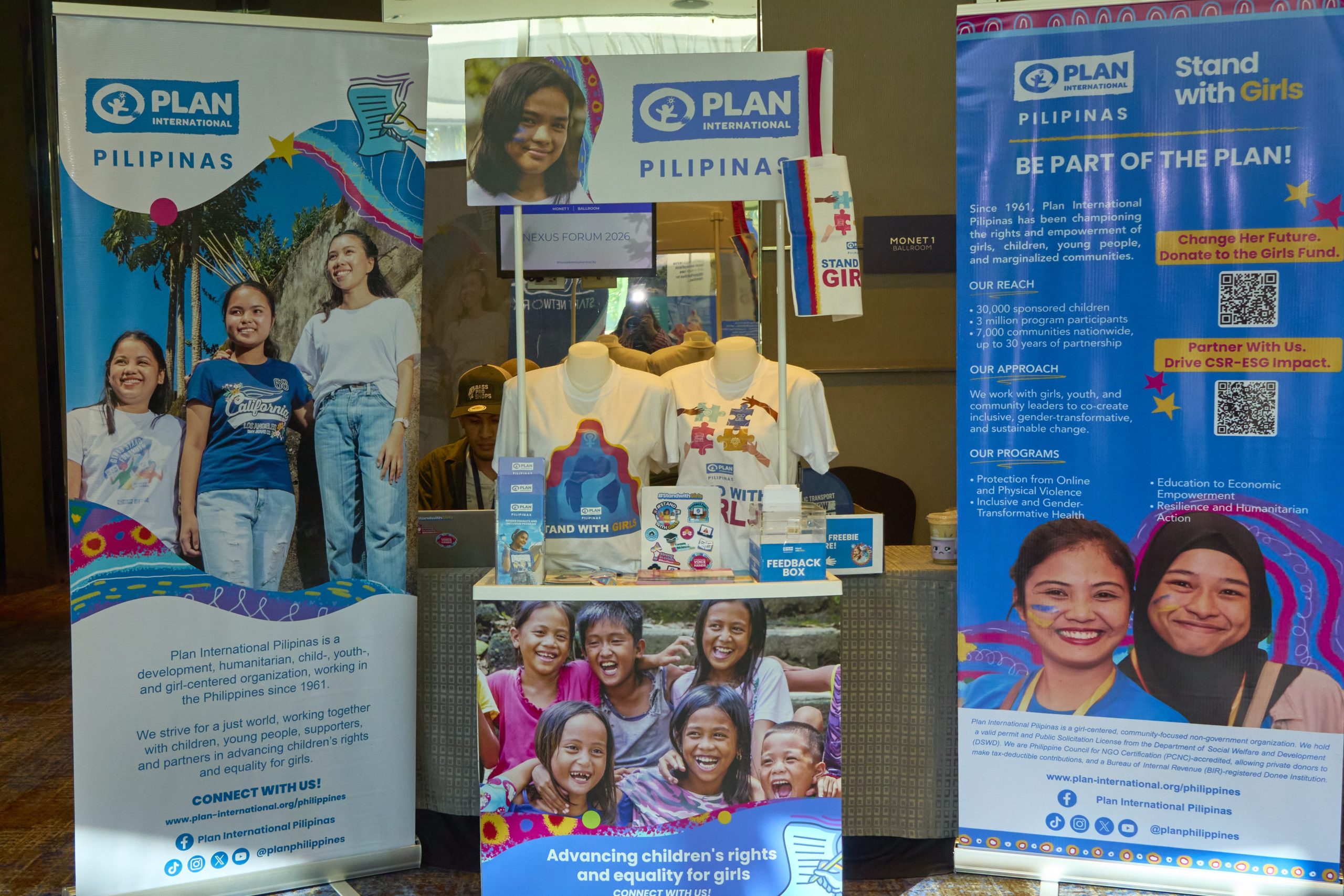
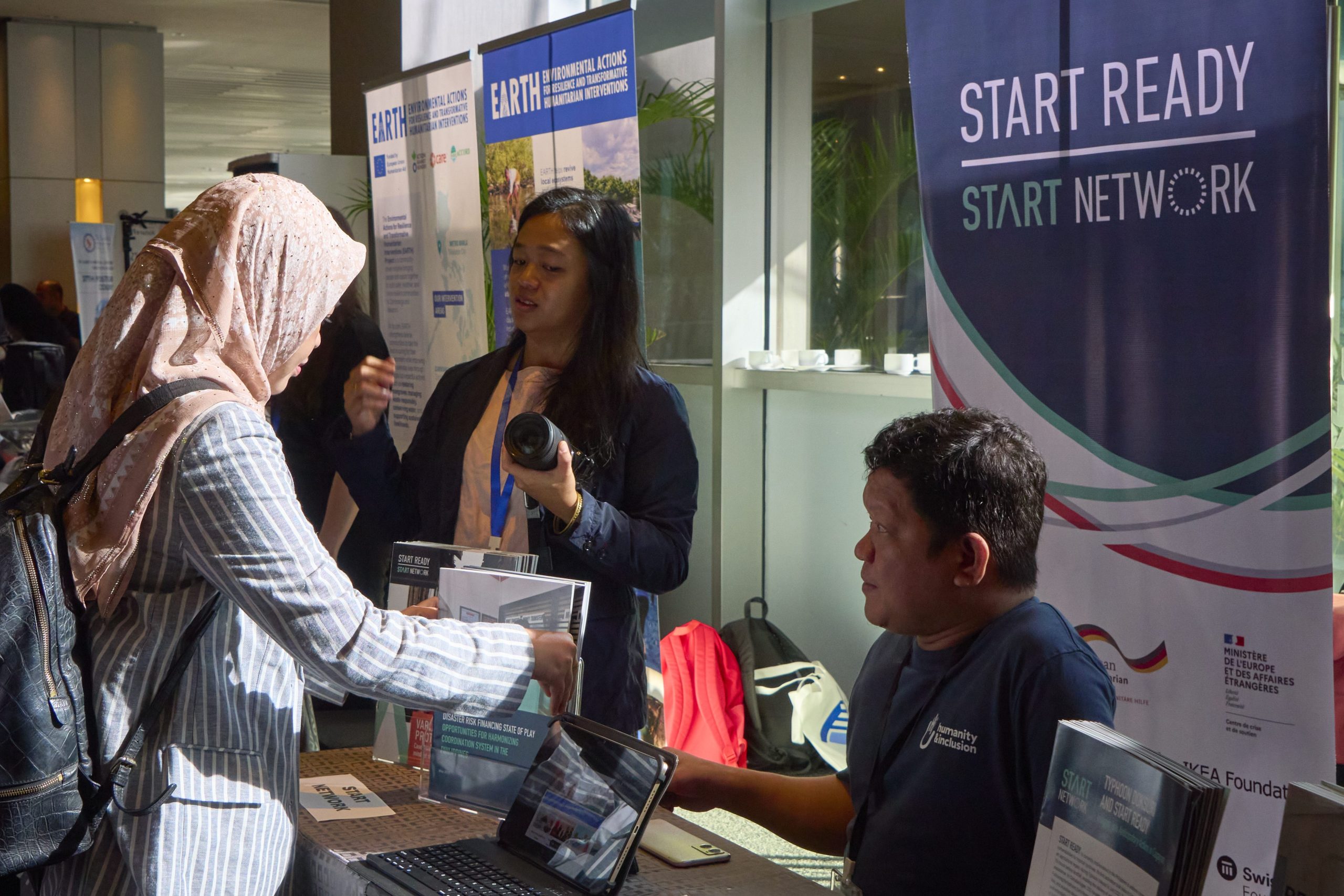
At the exhibit area, forum participants tested the Nexus Tracker at a hands-on booth, set up alongside exhibits from Action Against Hunger Philippines featuring the EU-funded EARTH Project and other initiatives, Philippine Misereor Partnership Inc. (PMPI) highlighting the “rights of nature” movement, CARE Philippines featuring the Emergency CARE Package, PINGON, Plan International Pilipinas, and Start Network/Humanity & Inclusion Philippines.
‘A checkpoint, not an endpoint’
Reflecting on what comes next, Mark Brayn Yaung, CARE Philippines Humanitarian, Disaster Resilience, and Peacebuilding Coordinator, emphasized that the work continues beyond the forum: “This is not an endpoint but a checkpoint for all of us. Communities cannot wait for perfect systems, and we can never be perfect. But we can always practice so we come in with progress.”
Mark Brayn Yaung, Humanitarian, Disaster Resilience, and Peacebuilding Coordinator, CARE Philippines
Atty. Alberto Muyot, Chief Executive Officer, Save the Children Philippines
To close the event, Atty. Alberto Muyot, CEO of Save the Children Philippines, called on fellow humanitarians to move forward with purpose: “Let us continue to build a humanitarian system that acts earlier, learns continuously, and is firmly anchored in the needs and strengths of the communities we serve.”
ACCESSis multi-year, multi-sectoral humanitarian and disaster preparedness initiative funded by European Union Humanitarian Aid and implemented by a consortium of 14 local and international organizations: ACCORD, Action Against Hunger Philippines, CARE Philippines, Community Organizers Multiversity (COM), Humanity & Inclusion Philippines, Integrated Mindanaons Association for Natives (IMAN), Kadtabanga Foundation for Peace and Development Advocates, Mindanao Organization for Social and Economic Progress (MOSEP), Oxfam Pilipinas, People’s Disaster Risk Reduction Network (PDRRN), Plan International Pilipinas, Save the Children Philippines, United Youth for Peace and Development (UNYPAD), and United Youth of the Philippines – Women (UnYPhil-Women).
BRIDGE
The BRIDGE Project is funded by the European Commission and implemented by ACCORD Incorporated, CARE Philippines, Community Organizers Multiversity, and Oxfam Pilipinas.
PINGON
PINGON serves as a venue to coordinate the provision and delivery of humanitarian aid by international, national, and local NGOs in times of major disasters and emergencies in the Philippines, ensuring that basic humanitarian principles are firmly upheld.
Blog, Disaster Response, Featured Stories, Latest News & Stories
In the aftermath of disasters, one of the biggest impacts is often invisible: trauma.
Following the magnitude 6.9 earthquake that hit Cebu, Philippines late in the evening of September 30, 2025, life has moved primarily outdoors for fear that aftershocks would topple homes and buildings.
Days later, residents affected by the destructive tremor – one group huddled under a tent, another by the roadside – gathered to tell stories. A child talked about losing a best friend, and the many plans they still had together. “I hope this is over soon,” said another, referring to the aftershocks, now numbering over 10,000. Witnessing the death of neighbors up close, some cried, others laughed nervously, perhaps as a way to cope.
Among those listening to them is Betcheba Ellorico Prochina, an educator by profession, and one of several volunteers – teachers, a social worker, and psychiatrists – who made the journey to Bogo City, Cebu from Agusan del Sur in northeastern Mindanao to provide psychological first aid (PFA) to communities affected by the quake.
A teacher’s calling: traveling miles to bring care, expecting no reward
Betcheba and the rest of the volunteers were trained in PFA in 2023 by an EU Humanitarian Aid-funded project called REACH, implemented by ACCORD, CARE, and partners.
That same year, they put their training into action when a 6.8 magnitude earthquake hit Sarangani in November 2023. ACCESS, another EU-funded action also led by ACCORD, CARE, and partners, sent out a call for volunteers to provide PFA to affected families.
The trip from Agusan del Sur to Sarangani was long – more than eight hours by land – and the task was emotionally demanding, but Betcheba had no second thoughts: “Volunteering is good for the heart,” she says. “We’re not psychologists, but through our simple way of delivering PFA, we were able to ease their psychological burden.”
In Cebu, trapped in traffic gridlock for hours, one song kept playing in her head: “Yes, I’m a teacher; I must brave all the roaring waves and the fury of the river and windy seas; I must climb on up the mountains and hills where children there wait for my love and care.”
What is psychological first aid?
“Before, people focused only on first aid for physical wounds and often neglected one of the most important aspects of our lives: our psychological and emotional well-being,” Betcheba explains. “Like a physical wound, if left unattended, it can worsen. For people who have experienced trauma, PFA helps them bounce back and regain a positive outlook.”
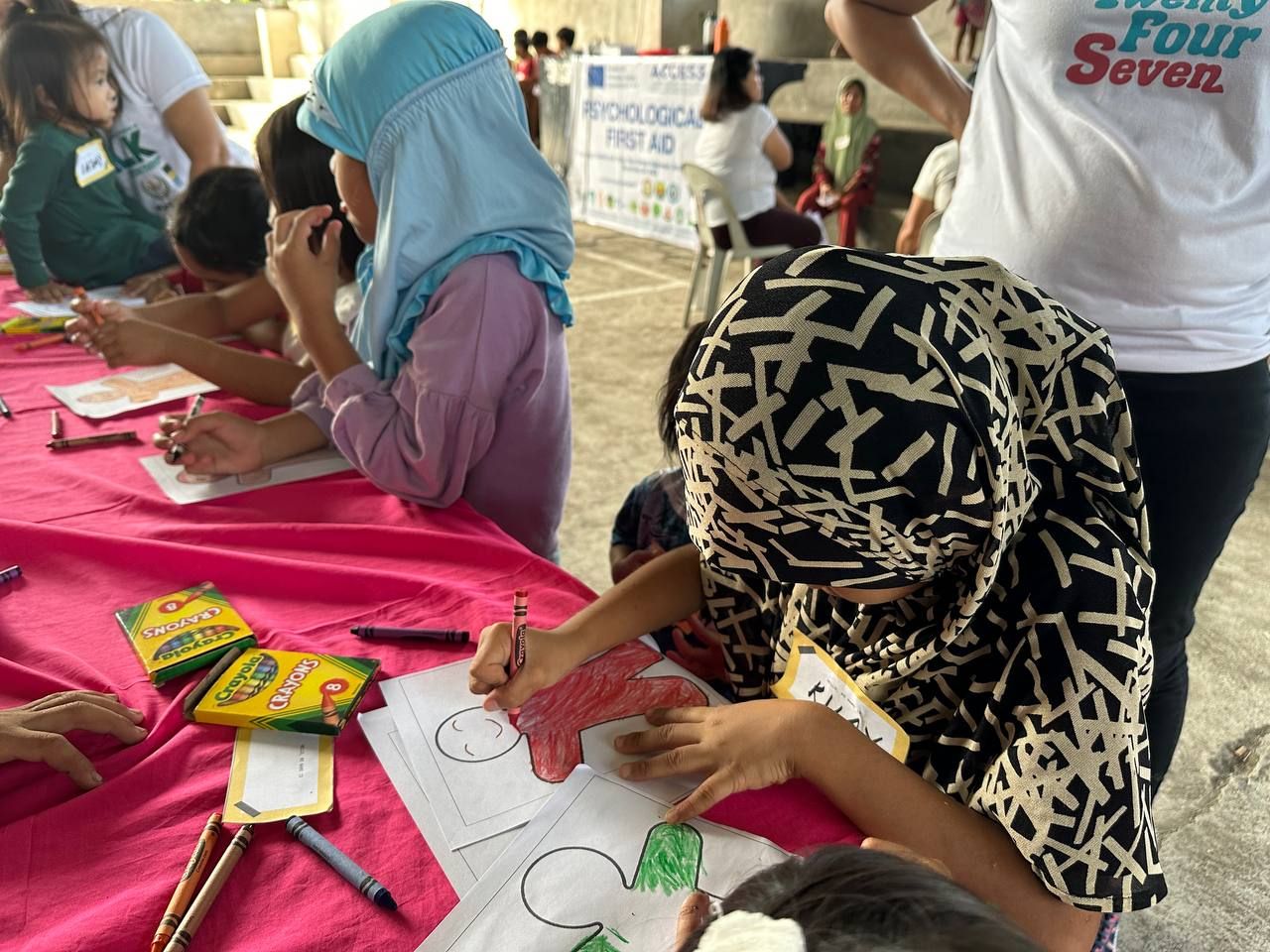
The sessions are designed to help participants process their experiences and emotions. Volunteers use games, songs, and simple activity sheets to help participants recognize and express their feelings. With gentle encouragement and non-judgmental listening, conversations begin to flow, and the weight of trauma can start to lift. Participants also learn practical tools such as breathing exercises to manage stress.
The volunteers knew their visit was only the first step, and that ongoing support would be crucial, especially for children and older persons, whose trauma might manifest in subtler ways.
Says Betcheba, “Volunteering is one way of destressing myself by destressing others. I’m glad that, if only for a short while, we helped take their minds off their worries.”
Local capacity building promotes fast, sustainable emergency response
Betcheba and the volunteers’ story is testament to the lasting impact of empowering local actors. Trained under a previous project, they consistently step up to serve other communities during new emergencies, a clear ripple of positive change extending well beyond the project’s timeline.
ACCESS is a multi-year, multi-sectoral project funded by the European Union Humanitarian Aid and implemented by a consortium of 14 local and international organizations: ACCORD, Action Against Hunger Philippines, CARE Philippines, Community Organizers Multiversity (COM), Humanity & Inclusion Philippines, Integrated Mindanaons Association for Natives (IMAN), Kadtabanga Foundation for Peace and Development Advocates, Mindanao Organization for Social and Economic Progress (MOSEP), Oxfam Pilipinas, People’s Disaster Risk Reduction Network (PDRRN), Plan International Pilipinas, Save the Children Philippines, United Youth for Peace and Development (UNYPAD), and United Youth of the Philippines – Women (UnYPhil-Women).
The European Union Humanitarian Aid-funded ACCESS Project is scaling up its humanitarian work in the Philippines through a two-year continuation, building on the lessons and gains from the past two years of delivering lifesaving assistance to families affected by conflict, displacement, and natural or climate-related hazards when they need it most.
Reaching underserved, last-mile communities across the Philippines
Since its launch in 2023, ACCESS has reached over 200,000 people with humanitarian aid and disaster preparedness support. This work will continue with ACCESS 2, which aims to reach 350,000 more people by 2027, still prioritizing the most at-risk individuals, including children, older persons, persons with disabilities, Indigenous Peoples, and newly displaced families in Mindanao and other crisis-affected areas.
Speed, Accuracy, and Quality
ACCESS remains committed to speed, accuracy, and quality in humanitarian response. This means acting quickly once it is safe to do so, ensuring aid is well-targeted and relevant to needs, and upholding high technical standards. The project operates across sectors including food security, health, shelter, WASH, protection, education in emergencies, disaster preparedness, anticipatory action, and humanitarian coordination. A rapid response mechanism allows teams to mobilize within 24 to 72 hours once it is safe to reach affected communities. Whether addressing sudden emergencies or chronic crises, the project is guided by the principle that no one should be left behind, especially in hard-to-reach areas.
“ACCESS delivers immediate humanitarian assistance to families affected and displaced by disasters and crises. With the support of the European Union, this effort ensures that aid reaches the most vulnerable, especially when local resources are not sufficient and needs are greatest.”
– Arlynn Aquino, Programme Officer and Head of Philippine Antenna, European Civil Protection and Humanitarian Aid Operations (ECHO)
ACCESS 2 brings together 14 international and local humanitarian organizations, many based in Mindanao. This locally led model draws on deep community knowledge and trusted relationships to deliver faster, more relevant assistance. Activities are gender- and age-sensitive and disability-inclusive, ensuring everyone’s needs are considered and assistance is provided without discrimination. The project also integrates environmental safeguards, following ECHO’s Minimum Environmental Requirements and climate-smart practices to reduce the impact of humanitarian activities.
“ACCESS is about working together—side by side with national and local organizations, government units, and other humanitarian actors—to make sure help gets to the people who need it most. Our partners on the ground know the realities and the needs of their communities. By combining our strengths, we can respond faster, reach farther, and support communities not just to recover, but to be ready for future crises.”
– Reiza Dejito, Country Director of ACCESS consortium lead CARE Philippines
Coordination and Advocacy
Beyond emergency response, ACCESS 2 invests in disaster preparedness at both community and subnational levels, helping local actors anticipate and mitigate risks. The project also includes a national advocacy component, working to strengthen policies and systems that protect at-risk populations. To ensure resources are used effectively, ACCESS 2 provides humanitarian coordination support, aligning assistance with other partners and local authorities.
Bridging Relief, Recovery, and Peace
ACCESS embraces a humanitarian-development-peace nexus approach, linking immediate relief with long-term resilience and conflict sensitivity. This integrated strategy helps address urgent needs while supporting local systems and reducing the risks that drive recurring crises.
Looking Ahead Together
At its core, the new two-year continuation of ACCESS reflects a renewed commitment to communities facing the greatest challenges: those living through conflict, displacement, and natural and climate-related hazards. It builds on what has already been achieved, with a focus on delivering timely, inclusive, and principled humanitarian aid, and sustaining efforts to help people recover with dignity and prepare for future crises. By working together, we move closer to a future where communities are safer, stronger, and more resilient.
About ACCESS
ACCESSis multi-year, multi-sectoral humanitarian and disaster preparedness initiative funded by European Union Humanitarian Aid. It serves the most affected, underserved, difficult-to-reach communities in the Philippines, where natural hazards, conflict, recurrent displacement, and intensifying climate-related risks continue to threaten lives and livelihoods.
ACCESS 2 is implemented by a consortium of 14 local and international organizations: ACCORD, Action Against Hunger Philippines, CARE Philippines, Community Organizers Multiversity (COM), Humanity & Inclusion Philippines, Integrated Mindanaons Association for Natives (IMAN), Kadtabanga Foundation for Peace and Development Advocates, Mindanao Organization for Social and Economic Progress (MOSEP), Oxfam Pilipinas, People’s Disaster Risk Reduction Network (PDRRN), Plan International Pilipinas, Save the Children Philippines, United Youth for Peace and Development (UNYPAD), and United Youth of the Philippines – Women (UnYPhil-Women).
The landmark legislation, Republic Act No. 12287, paves the way for proactive government response, protecting people before floods, typhoons, or other hazards hit
In a historic move to save lives and protect at-risk communities, the Philippine government has passed the Imminent Disaster Bill into law, establishing a national framework for anticipatory action – measures taken before a hazard hits or before its worst impacts are felt. The law mandates that government agencies act before impacts peak: to pre-position supplies, organize preemptive evacuation, or release early cash or in-kind support.
“This is a turning point for the Philippines: from reacting after a disaster to protecting people before it strikes. The real test is in implementation, and we stand ready to work with government and communities to make anticipatory action a reality nationwide,” says Reiza Dejito, Country Director of CARE Philippines, the organization leading the European Union Humanitarian Aid-funded ACCESS Project, which implements anticipatory action initiatives.
“With this new law, the government can now officially lead anticipatory actions and utilize state resources to save lives and protect livelihoods. The era of waiting for the most vulnerable to experience the full brunt of a disaster before help arrives is, we hope, coming to an end,” says Lot Felizco, Executive Director of Oxfam Pilipinas, an ACCESS consortium member.
Centering Community Voices
People most affected by typhoons, floods, and other hazards are now covered by a clear legal mandate for early action. Civil society organizations, including ACCESS members, helped ensure the law is grounded in the realities of communities frequently affected by disasters, amplifying local voices to inform policy and keeping the law steadfast to its core purpose: to save lives, protect livelihoods, uphold dignity, and adhere to the ‘do no harm’ principle.
“For the longest time, our communities have been on the frontlines of climate change, waiting for the next storm to take everything from them. This law gives us hope and a fighting chance. It is a testament to what is possible when we work together towards a common goal of resilience,” says Esteban Masagca, Executive Director of People’s Disaster Risk Reduction Network (PDRRN).
Adds Sindhy Obias, Executive Director of Assistance and Cooperation for Community Resilience and Development (ACCORD), “More than anticipating disasters, the law recognizes the strength and wisdom of Filipino communities who have long been the first responders. This legal foundation strengthens our collaboration with government, partners, and communities so that preparedness is a guaranteed right for every family at risk.”
‘No One Left Behind’
The law helps broaden support for women, girls, older adults, people with disabilities, and others who often face barriers to aid.
“Disasters affect girls differently and disproportionately,” says Pebbles Sanchez-Ogang, Executive Director of Plan International Pilipinas. “The new law enables earlier action to protect girls and meet their specific needs before disasters strike, helping ensure that every child—especially every girl—is safe, empowered, and resilient in the face of typhoons and other emergencies,” she adds.
Says Melanie Ruiz, Country Manager of Humanity & Inclusion Philippines, “Through this new law, we continue to promote inclusive anticipatory action, enabling meaningful participation of people with disabilities, older adults, women, children, and other marginalized groups in disaster preparedness, to ensure no one is left behind.”
Enabling Proactive Measures
The new law provides a clear legal framework for government agencies at all levels to:
Pre-position goods and supplies in areas forecasted to be hit by a hazard
Implement pre-emptive evacuations to ensure citizen safety
Distribute cash or aid assistance to families so they can meet basic needs without resorting to negative coping strategies
Secure assets and livelihoods, such as boats, livestock, and equipment, minimizing economic loss
This proactive approach protects development gains and breaks the cycle of poverty exacerbated by repeated disasters. “This legislation is a milestone that reinforces ongoing efforts to integrate early action, preparedness, and disaster risk reduction into both humanitarian and development programs,” says Suresanathan Murugesu, Country Director of Action Against Hunger Philippines.
Proven Anticipatory Action Activations
Since 2023, ACCESS has been delivering anticipatory action support to the most at-risk, difficult-to-reach communities in Mindanao and across the country, covering hazards such as floods and typhoons, as well as conflict. This meant communities had access to essentials such as food and water, could safeguard personal belongings and livelihood tools, and move to safety before impact.
Consortium advocacy has also strengthened local adoption: In 10 barangays in Basilan and Sulu, barangay councils passed resolutions adopting anticipatory action and rapid response mechanisms introduced under ACCESS through Save the Children Philippines, Nagdilaab Foundation, and Notre Dame of Jolo College. Communities designed the plans to reflect local risks and realities and tested them through a simulation drill, advancing more inclusive, child-sensitive disaster response and preparedness.
During the 2024 El Niño in the Bangsamoro Autonomous Region in Muslim Mindanao (BARMM), SUPREME BARMM, another EU Humanitarian Aid-supported initiative led by Oxfam Pilipinas, activated the country’s first anticipatory action for drought. Communities in the Special Geographic Areas (SGAs) received critical cash, in-kind, and information assistance before the drought peaked, helping to reduce its impact. The project also activated anticipatory action ahead of severe floods in Cotabato City between 2020 and 2023.
A Call for Collective Action
While the passage of the law is a win, its rollout will require close collaboration between government, civil society, and communities in hazard-prone areas. ACCESS consortium members are committed to ensuring that efforts remain grounded in the lived realities of those most affected.
About ACCESS
ACCESSis multi-year, multi-sectoral humanitarian and disaster preparedness initiative funded by European Union Humanitarian Aid. It serves the most affected, underserved, difficult-to-reach communities in the Philippines, where natural hazards, conflict, recurrent displacement, and intensifying climate-related risks continue to threaten lives and livelihoods. Since 2023, the project has helped more than 200,000 people.
ACCESS is implemented by a consortium of 14 local and international organizations: ACCORD, Action Against Hunger Philippines, CARE Philippines, Community Organizers Multiversity (COM), Humanity & Inclusion Philippines, Integrated Mindanaons Association for Natives (IMAN), Kadtabanga Foundation for Peace and Development Advocates, Mindanao Organization for Social and Economic Progress (MOSEP), Oxfam Pilipinas, People’s Disaster Risk Reduction Network (PDRRN), Plan International Pilipinas, Save the Children Philippines, United Youth for Peace and Development (UNYPAD), and United Youth of the Philippines – Women (UnYPhil-Women).
For media inquiries, please contact:
Tanya Mariano
Communications Specialist – Humanitarian, Disaster Resilience, and Peacebuilding Unit
Disaster Response, Featured Stories, Latest News & Stories
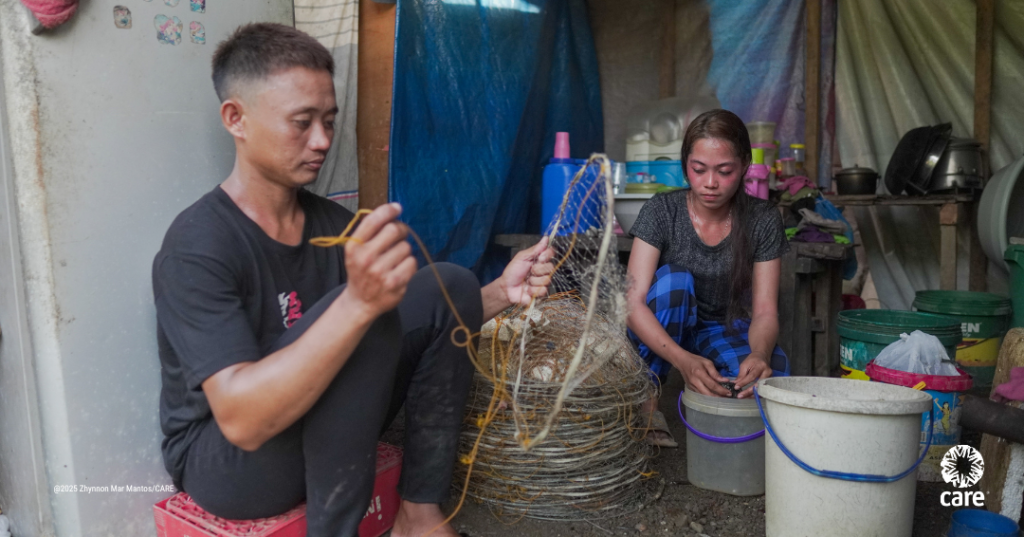
Charmine Rudolfo and Jay Vallestin, both 25, live with their two children in San Antonio, Panganiban, Catanduanes. For six years, they have built a life near the sea. Jay fishes for shrimp and crabs, while Charmine takes care of their children and home.
Living close to the sea has its costs, especially when storms and typhoons strike. When Typhoon Pepito hit, strong winds and rising waves destroyed everything. Their home, made of plywood and thatched nipa leaves, was swept away. “We lost everything to the sea,” Charmine said.
For a month, the family stayed in an unused space in their village leader’s house. They relied on government food support for their daily survival. Jay would go out to sea for hours, hoping to catch enough to feed the family and earn a little income. Sometimes, he would return with nothing. The uncertainty of each day weighed heavily on them.
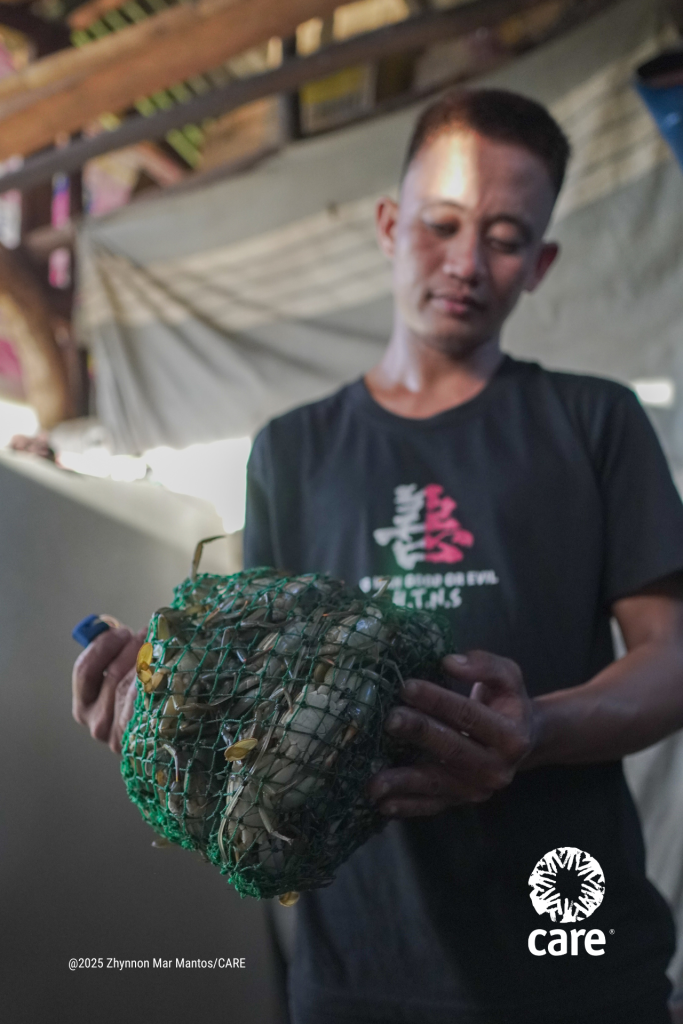
Photo: Jay shows the juvenile crabs he caught that were packed and ready to be sold to mud crab growers.
Their children still feel scared when it rains heavily. The sound of strong winds or pounding rain brings back memories of the typhoon. As parents, Charmine and Jay find this heartbreaking. They want their children to feel safe again.
Determined to rebuild, they borrowed money to buy lumber and hire a carpenter. Though the interest was high, they took the loan because they had no other option. However, the funds were still not enough. They used scrap GI sheets for walls and gathered sand and pebbles from the shore to create a temporary floor.
When CARE, through the UNCERF-funded emergency response, arrived in their community, they assessed the damages and the needs of the most affected people. Charmine and Jay’s family qualified for shelter repair kits and multi-purpose cash assistance. These resources gave them the support they needed to begin rebuilding their home with dignity and hope.
With the materials and cash assistance, they began rebuilding together. Jay helped the carpenter after fishing trips, and Charmine hauled sand and gravel.
“We worked together to save on labor costs,” Charmine said.
Today, their house is still a work in progress. The walls need to be completed with plywood and properly braced. The floor remains unfinished, but they plan to buy cement to make it sturdier and safer for their children. The kitchen also still needs to be built, so Charmine can once again cook meals in a space of her own. The roof also needs to be reinforced to withstand strong winds. With the rainy season usually beginning in June, they are doing their best to prepare and protect their family.
Photo: Jay readies the crab traps in preparation for another fishing trip while Charmine cleans the catch for selling.
“It is small, but we have big dreams,” Jay said. “We are working hard so we can make it stronger and one day move to a safer place.”
Disaster Response, Featured Stories, Latest News & Stories, Press Release
The funding will help bring food, clean water, sanitation facilities, and protection assistance to the hardest-hit, least-served, most remote communities
Manila, Philippines, 19 August 2024 – The ACCESS consortium – made up of five international and nine local organizations implementing the ACCESS Project – has secured ₱76 million (€1.2 million) in funding from the European Union (EU) to deliver timely, appropriate, life-saving aid to communities in Cotabato, Lanao del Sur, Maguindanao del Norte and del Sur, and Sultan Kudarat who were affected by the July 2024 flooding and landslides.
Said Ansherina Talavera, Humanitarian and Peacebuilding Coordinator of consortium lead CARE Philippines: “As humanitarian workers, we’re committed to addressing human suffering wherever it is found, with a particular focus on the most vulnerable. This funding from the European Union helps us support the hardest-hit communities, who are not only dealing with the aftermath of floods and landslides but are also facing the ongoing challenges of conflict and climate change.”
The consortium had been on the ground when floods and landslides hit the region, allowing it to immediately assess the situation, identify urgent needs, and deliver initial relief. This established presence in Mindanao and across the Philippines is made possible by the ACCESS-initiated Equitable Partnership Alliance – a non-formal network of local, national, and international non-government organizations committed to delivering quality humanitarian, development, and peacebuilding programs in the country.
The funding will help ACCESS provide food assistance, clean water, sanitation facilities, hygiene promotion, and essential services protecting the rights and ensuring the safety and wellbeing of affected families. As with all its emergency response efforts, the consortium will target the hardest hit, least served, difficult-to-reach areas, prioritizing low-income households for whom recovery may be challenging, and including older persons, pregnant and lactating women, persons with disability, female-headed households, and households from indigenous groups.
From El Nino to floods and landslides
The massive flooding and landslides – the result of the interaction of multiple, successive weather systems, including the southwest monsoon – came just as families were recovering from the impacts of El Nino. Many had also been grappling with the protracted, decades-long conflict across Mindanao.
Urgent needs
Among affected and displaced individuals, the consortium found high levels of food insecurity; significant losses in incomes and livelihood assets; poor water supply, sanitation, and hygiene conditions; extensive damages to belongings and the loss of important civil documents; heightened risks of sexual violence and exploitation against women and children; and a need for mental health and psychosocial support.
Said Talavera, “ACCESS is focused on providing urgent aid and helping families rebuild their lives with resilience and dignity.”
ACCESS (Assisting the Most Vulnerable Communities and Schools Affected by Complex Emergencies in Accessing Quality and Timely Humanitarian and Disaster Preparedness Services) is a multi-year, multi-sectoral project funded by the European Union Civil Protection and Humanitarian Aid Operations (ECHO). The ACCESS Mindanao flood emergency response will be implemented by consortium members ACCORD, Action Against Hunger Philippines, CARE Philippines, Community Organizers Multiversity, Humanity & Inclusion Philippines, Mindanao Organization for Social and Economic Progress, and Save the Children Philippines, together with Oxfam Pilipinas and United Youth of the Philippines-Women.
Blog, Disaster Response, Featured Stories, Latest News & Stories, Women and Girls
In a northern Philippine province, a woman and her community’s story of coming together and rebuilding safer houses
When Super Typhoon Egay (international name: Doksuri) struck the Philippines in July 2023, its rapid intensification took many by surprise. It dumped more than a month’s worth of rain in two days, damaged some 56,000 houses, and affected three million people.
Miriam Bisares, 31, lost her home and almost all possessions. She lives with her husband and three children in a barangay (village) by a river in Abra, one of the worst-hit provinces. Running to safety that day was not easy. Her two older kids, ages 14 and 12, were ill with chicken pox and had to be carried. The flood submerged the paths to higher ground, so they had to cut a way through a thick tangle of grass and shrubs.
Today, her community remembers it as a difficult time, but alongside memories of the trials are ones of coming together and rebuilding. And despite the challenges, women like Miriam demonstrated capable leadership, playing a crucial part in helping her community learn how to become more resilient by building safer homes, with support from the European Union Humanitarian Aid and the ACCESS Project.
In the 14 years Miriam’s family had lived in Barangay Sao-atan in Bangued, Abra Province, they hadn’t experienced flooding as destructive as Super Typhoon Egay.
Their old shack—made of light materials and located a few meters away from the edge of a river cliff—was swept away completely.
Recovery was hard. She occasionally finds work in sales as a “push girl” and “promodiser;” her husband is a merchandiser at a food manufacturing company but is not yet a regular employee.
That Barangay Sao-atan lies next to a river is both a blessing and a burden: on the one hand, residents get to plant crops on its fertile banks; on the other, it makes the village flood-prone.
The river also serves as a source of water for household use. During the rainy season, however, the water becomes murky and unusable. During dry spells, the river contracts, and residents have to climb down and up the steep river cliff while balancing one or two buckets.
At around 10 A.M., the water rose quickly. Amidst heavy rain and howling winds, Miriam’s family left their house and sought temporary shelter in this hut, which sits on slightly higher ground, further away from the river.
By 6 P.M., the water was at their feet again. With a big knife, they slashed a path through the bushes to escape.
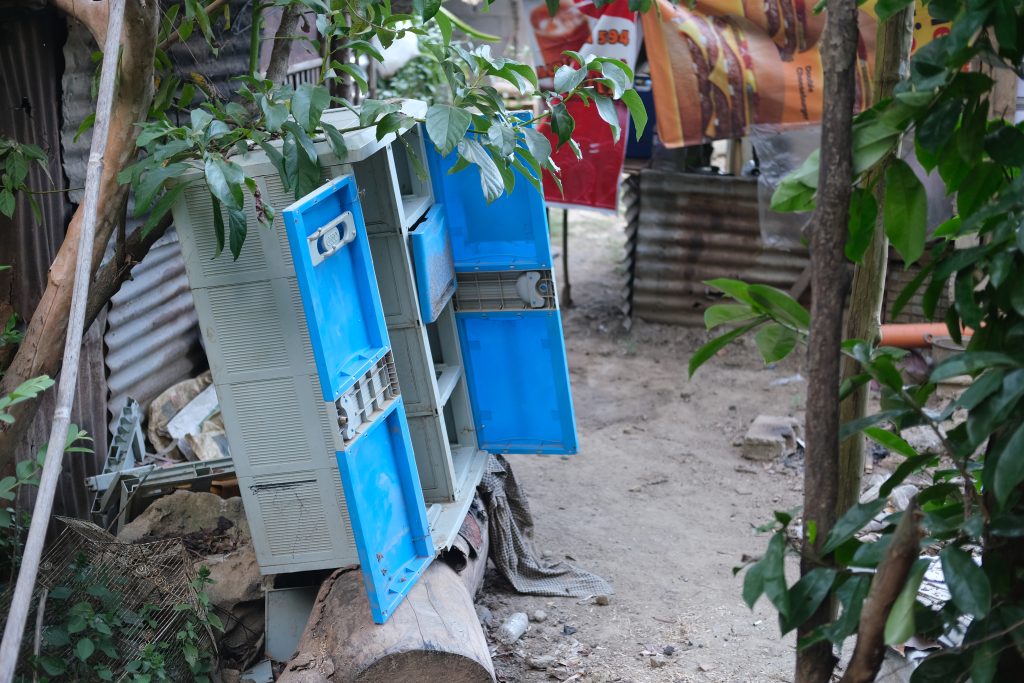
Months after the typhoon, damaged plastic “durabox” cabinets, scrubbed clean of mud and left to dry out in the sun, still litter the village.
Miriam’s family lost almost everything. Fortunately, her eldest had the presence of mind to save important documents, such as birth certificates, and even her parents’ high school diplomas.
When the floodwaters receded, cleanup—a collective community endeavor—commenced. Miriam and her family stayed with a relative for one month. Thanks to another relative, who owned an unproductive lot in an elevated part of the village and who let Miriam and other neighbors rebuild their houses on it, those affected by the flood were able to start anew in a safer location.
Through the ACCESS Project, Miriam and other residents severely affected by the typhoon received shelter assistance through repair kits and training sessions on how to build back safer. The project encouraged the community to work together to rebuild each other’s homes.
It also formed a shelter roving team, a group of community members that ensured houses were repaired or rebuilt properly. As part of the team, Miriam became well-versed in Building Back Safer (BBS) principles. She can explain why having strong bracing, interlocking joints, anchored posts, and other BBS techniques are key to building safer homes.
Miriam and her family moved into their new house a month before Christmas.
“Malaki ang pagbabago. Safe at komportable kami dito. Hindi na kami nangangamba na maaabutan ng tubig kung sakaling may bagyo (It’s a huge difference. We’re safe and comfortable here. We don’t worry about the water reaching us in the event of a typhoon).”
– Miriam (Bangued, Abra)
The project also provided water, sanitation, and hygiene (WASH) assistance by building a water system and holding hygiene promotion activities. There are shaded benches near the water system where women sometimes congregate, working on chores together, or just staying for a chat.
“Sabi ng mga matatanda, himala daw na may tubig na kami dito. Dati na kasing problema yan (The elders say it’s a miracle we now have water here. That was always a problem),” says Miriam.
These days, Miriam and her husband are focused on taking care of the children. He cooks for them before leaving for work; she walks them to and from school.
Asked what aspirations she has for the family, she says, “Pangarap ko na mapatapos silang tatlo sa pag-aaral para maganda ang kinabukasan nila (I hope we can support the three of them so they can finish school and have a better future.”
ACCESS gave shelter assistance to some 1,650 individuals and repaired 530 houses across the provinces of Abra and Cagayan. The project is funded by the European Union Civil Protection and Humanitarian Aid Operations and implemented by ACCORD Inc., Action Against Hunger Philippines, Humanity and Inclusion Philippines, Community Organizers Multiversity, and CARE Philippines.
Blog, Disaster Response, Latest News & Stories, Stories of Change, Uncategorized, Women and Girls
Written by: Reiza S. Dejito (CARE Philippines)
Ten years ago, Typhoon Haiyan, known in the Philippines as Yolanda, roared through the central islands of the archipelago. It was a storm that would go down in history as one of the most powerful typhoons ever recorded. Today, we stand a decade removed from the devastation, yet the memories remain, etched into the heart of every survivor and every humanitarian effort that rose from the rubble. Maria Theresa “Tess” Bayombong, a Program Consultant for CARE Philippines, offers a stirring retrospective of the resilience, recovery, and rebirth in the aftermath of the super typhoon.
Tess’ Recollections: Solidarity Amidst Ruins: “When I first set foot in the typhoon-stricken village of San Miguel, Leyte, the destruction was unimaginable,” Tess begins. “But amidst this landscape of despair, what moved me were not the signs of destruction but the signs of unity and human spirit.” She witnessed a community coming together, embodying the Filipino spirit of “bayanihan”—helping hands and hopeful hearts working in unison to rebuild, even as they carried the weight of their own losses.
In photo: Ms. Tess Bayombong
“Their gratitude for the simple necessity of roofing materials was a powerful reminder of human resilience,” Tess recalls. “Even when our resources could not reach everyone, the community took it upon themselves to share what little they had, ensuring no one was left unprotected from the elements. This collective sacrifice and kindness were truly inspiring.”
Impact and Adaptation: The CARE Response: Tess reflects on the long-term impact Haiyan had on the people’s livelihoods, especially in areas like Leyte where coconut farming was not just a job but a way of life passed down through generations. “Seeing the women of these communities, who had lost the very tools of their trade, come together to learn new skills and rebuild their livelihoods was a testament to their indomitable will,” she notes.
CARE’s adaptive humanitarian response played a pivotal role in this transformation. From immediate life-saving assistance to supporting long-term self-recovery, CARE’s three-phase approach was not only practical but deeply empathetic. Tess speaks proudly of the organization’s efforts in providing technical assistance, training, and financial support that empowered women and rejuvenated local economies.
Lessons Learned: Shaping Future Responses: The greatest lessons come from the hardest experiences. Tess emphasizes that the most crucial takeaway from the Typhoon Haiyan response was the effectiveness of a phased, adaptable approach in emergency response. “It was about listening to the needs of the community and responding in a way that supported not just survival but sustainable growth and self-sufficiency.”
This experience has indelibly shaped CARE’s approach to disaster preparedness and response. Gender-responsive strategies and financial assistance have helped pave the way for a future where communities are not only ready to face emergencies but are also equipped to thrive afterward.
A Beacon of Hope for Tomorrow: As we commemorate the ten-year anniversary of Typhoon Haiyan, we don’t just look back; we look forward, carrying the lessons and stories of strength with us. Tess’ account is a beacon of hope—an illumination of the path forward marked by solidarity, resilience, and an unwavering commitment to empowerment and preparedness.
“Typhoon Haiyan was a story of loss, but more importantly, it was a story of hope, of communities coming together, of women taking charge of their destinies, and of an organization that stood by them,” Tess concludes. “Today, we remember, we honor, and we continue to build a more resilient future.”